Blog
How to Choose Jewelry for Men


Learning how to choose jewelry for men requires understanding a unique intersection of personal style, material quality, and long-term value that differs significantly from selecting women’s accessories. The men’s jewelry market has expanded dramatically over the past decade, moving well beyond traditional wedding bands and cufflinks to encompass a diverse range of pieces including bracelets, necklaces, rings, and even earrings. This shift reflects broader cultural changes in how masculinity and self-expression intersect, creating both opportunities and challenges for men navigating this territory for the first time. The questions surrounding men’s jewelry selection often center on appropriateness, quality assessment, and value retention.
Many men wonder whether certain pieces will complement their professional image, how to distinguish between genuine precious metals and plated alternatives, and whether their purchase represents a sound financial decision alongside its aesthetic appeal. These concerns are legitimate, particularly given that quality men’s jewelry represents a significant investment that can range from several hundred to several thousand dollars for a single piece. By the end of this guide, readers will possess a working knowledge of metal types and their properties, understand how to evaluate craftsmanship and authenticity, recognize which styles suit different occasions and personal aesthetics, and appreciate the investment potential of precious metal jewelry. Whether purchasing a first significant piece or building upon an existing collection, this information provides the foundation for making informed decisions that balance style preferences with financial prudence.
Table of Contents
- What Factors Should Men Consider When Choosing Jewelry?
- Understanding Precious Metals for Men’s Jewelry
- Classic Men’s Jewelry Styles and Their Appropriate Contexts
- How to Evaluate Jewelry Quality and Craftsmanship
- Men’s Jewelry as Investment: Balancing Style with Financial Considerations
- Caring for and Maintaining Men’s Jewelry Collections
- How to Prepare
- How to Apply This
- Expert Tips
- Conclusion
- Frequently Asked Questions
What Factors Should Men Consider When Choosing Jewelry?
The selection process for men’s jewelry involves several interconnected factors that extend beyond simple aesthetic preference. Lifestyle compatibility stands as perhaps the most practical consideration, as jewelry must withstand the wearer’s daily activities without excessive wear or risk of damage. A man who works with his hands requires different specifications than someone in a corporate office environment, and understanding these requirements prevents costly mistakes and disappointment.
Personal style alignment deserves equal attention, though many men underestimate its importance. Jewelry should complement existing wardrobe choices and reflect authentic personality rather than following trends that feel forced or uncomfortable. A minimalist dresser typically gravitates toward clean, understated pieces, while someone with a bolder fashion sense might embrace chunkier chains or statement rings. This alignment ensures that purchases receive regular wear rather than languishing in a drawer.
- **Durability requirements**: Consider occupation, hobbies, and daily activities when selecting materials and designs that can withstand regular use
- **Budget parameters**: Establish clear spending limits while understanding that quality pieces often justify higher initial costs through longevity and retained value
- **Occasion versatility**: Evaluate whether pieces transition smoothly between casual and formal settings or serve specific purposes

Understanding Precious Metals for Men’s Jewelry
Precious metals form the foundation of quality men’s jewelry, and understanding their properties enables smarter purchasing decisions. gold remains the most traditional choice, available in various purities measured by karats. Pure 24-karat gold proves too soft for everyday jewelry, making 14-karat and 18-karat alloys the practical standards. These alloys combine gold with metals like copper, silver, or palladium to increase hardness while retaining gold’s distinctive appearance and value. The color variations of yellow, white, and rose gold result from different alloy compositions rather than fundamentally different metals.
Silver offers an accessible entry point into precious metal jewelry, though its properties require specific consideration. Sterling silver, containing 92.5% pure silver, provides adequate durability for most applications but tarnishes when exposed to air and moisture. This maintenance requirement suits some men while deterring others. Platinum represents the premium option, offering exceptional durability, hypoallergenic properties, and a naturally white color that requires no rhodium plating. Its density makes platinum pieces feel substantial, though this weight commands prices approximately 50% higher than equivalent gold pieces.
- **Gold purity trade-offs**: Higher karat gold offers greater intrinsic value but reduced scratch resistance; 14K provides optimal balance for active lifestyles
- **Silver maintenance reality**: Budget for polishing cloths and storage solutions if choosing sterling silver pieces
- **Platinum advantages**: Superior scratch resistance and permanent color make platinum ideal for rings subjected to constant wear
Classic Men’s Jewelry Styles and Their Appropriate Contexts
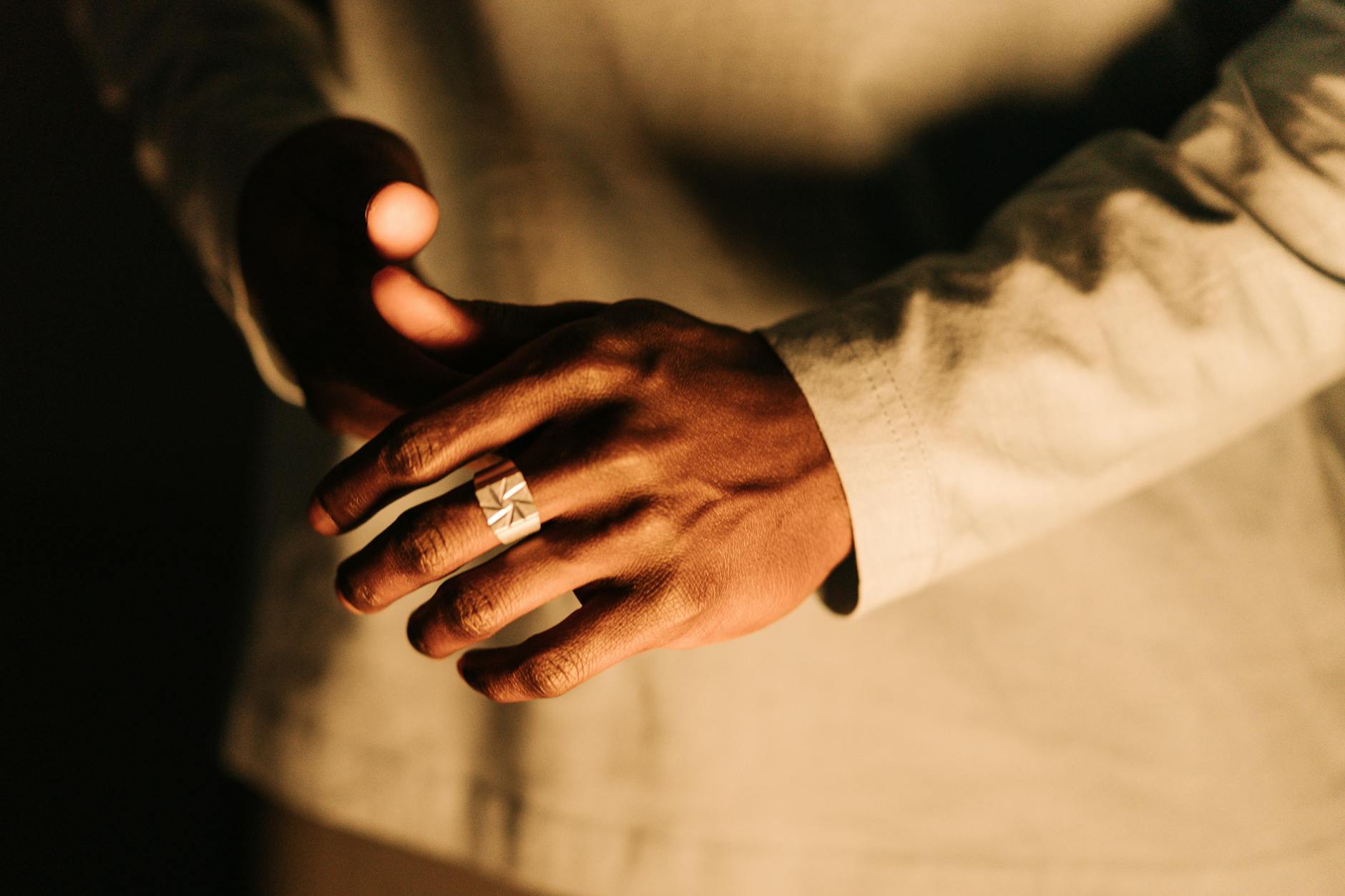
The landscape of men’s jewelry encompasses several established categories, each carrying distinct connotations and appropriate usage contexts. Rings represent the most universally accepted category, ranging from wedding bands to signet rings and fashion pieces. Wedding bands communicate commitment and traditionally feature simple, understated designs in gold or platinum. Signet rings carry historical significance, originally serving as personal seals, and contemporary versions often feature family crests, initials, or meaningful symbols.
Necklaces and chains have gained substantial acceptance in recent years, though selection requires attention to proportion and style coherence. Chain thickness should complement the wearer’s build, with broader-shouldered men able to carry heavier chains that might overwhelm smaller frames. Pendant selection offers opportunity for personal expression, with religious symbols, meaningful talismans, or simple geometric shapes serving different purposes. Bracelets occupy increasingly mainstream territory, with options ranging from leather and metal combinations to solid precious metal designs.
- **Professional environment guidelines**: Conservative workplaces typically accept wedding bands, simple watches, and subtle cufflinks while viewing necklaces and multiple rings with greater scrutiny
- **Casual versatility**: Weekend and social settings permit broader experimentation with chains, bracelets, and statement rings
- **Formal occasion protocols**: Black-tie events call for refined pieces like quality cufflinks and understated wedding bands rather than casual chains or fashion rings
How to Evaluate Jewelry Quality and Craftsmanship
Assessing jewelry quality requires attention to specific technical details that distinguish well-made pieces from inferior alternatives. Hallmarks provide the first verification point, as reputable manufacturers stamp their pieces with metal purity indicators, maker’s marks, and sometimes date codes. A 14K gold piece should display “14K” or “585” (representing 58.5% gold content) stamped in an inconspicuous location. Absence of these marks suggests either costume jewelry or potentially misrepresented materials.
Construction quality becomes apparent through close inspection of joints, clasps, and finishing details. Quality chains feature secure, smooth-operating clasps that show no gaps or rough edges. Ring interiors should feel smooth against the skin, with no casting imperfections or tool marks visible. Weight provides another indicator, as solid precious metal pieces feel substantial compared to hollow or plated alternatives. A jeweler’s loupe reveals finishing quality invisible to the naked eye, showing whether surfaces are properly polished and whether prongs securing any stones are symmetrical and secure.
- **Authentication importance**: Request certificates of authenticity for significant purchases and verify through independent appraisal when buying vintage or estate pieces
- **Construction red flags**: Visible solder joints, uneven surfaces, loose stones, and cheap-feeling clasps indicate inferior manufacturing
- **Weight as indicator**: Compare pieces of similar size; dramatically lighter weights suggest hollow construction or base metal cores beneath precious metal plating
Men’s Jewelry as Investment: Balancing Style with Financial Considerations
The investment dimension of men’s jewelry adds complexity to purchasing decisions, as precious metal content provides inherent value independent of fashion trends. Gold and platinum jewelry retains value tied to commodity markets, offering a tangible asset that can be liquidated if necessary. This characteristic distinguishes precious metal jewelry from fashion accessories that depreciate immediately upon purchase. Understanding the relationship between retail price, metal content, and potential resale value enables more strategic acquisition.
Retail markups on new jewelry typically range from 100% to 300% above intrinsic metal value, accounting for design, craftsmanship, brand premiums, and retailer margins. This reality means that immediate resale rarely recovers purchase price, making jewelry a medium to long-term value proposition rather than a liquid investment. Estate jewelry and pre-owned pieces often provide better value, as previous owners absorbed the initial depreciation. Auction houses and estate sales offer opportunities to acquire quality pieces closer to intrinsic metal value.
- **Intrinsic value calculation**: Determine the gold or platinum content by weight and multiply by current spot prices to understand baseline value
- **Brand premium reality**: Prestigious brand names command significant premiums that rarely transfer to resale value; quality craftsmanship matters more than logos
- **Market timing**: Precious metal prices fluctuate; major purchases during market dips can enhance long-term value retention

Caring for and Maintaining Men’s Jewelry Collections
Proper maintenance extends the lifespan and appearance of jewelry while protecting investment value. Storage represents the foundation of care, as improper storage allows pieces to scratch against each other and exposes reactive metals to damaging environmental factors. Individual soft pouches or compartmentalized jewelry boxes prevent contact damage, while anti-tarnish strips or silica gel packets reduce oxidation in enclosed spaces. Removing jewelry before swimming, showering, or working with chemicals prevents exposure to chlorine, saltwater, and harsh substances that damage metals and finishes.
Cleaning routines vary by metal type and should occur regularly to maintain appearance. Gold and platinum respond well to warm water with mild dish soap, applied with a soft brush to reach crevices. Sterling silver requires specialized silver polish or cleaning cloths designed to remove tarnish without scratching. Professional cleaning and inspection every twelve to eighteen months identifies worn clasps, loose settings, or developing problems before they result in loss or damage.
How to Prepare
- **Assess your existing wardrobe and style**: Examine your closet and identify dominant colors, materials, and style patterns. Note whether you gravitate toward casual or formal dress, warm or cool tones, and minimalist or layered looks. This assessment reveals which metal colors and jewelry styles will integrate naturally.
- **Establish a realistic budget range**: Research current prices for the piece types you’re considering, accounting for metal purity and brand variations. Set a firm maximum while remaining flexible within your range. Quality pieces at moderate price points often outperform cheaply made expensive alternatives.
- **Research reputable jewelers and sellers**: Identify established jewelers with strong reputations, clear return policies, and professional certifications. Read reviews focusing on customer service experiences rather than just product satisfaction. For significant purchases, confirm the jeweler provides authentication documentation.
- **Learn to read hallmarks and certifications**: Familiarize yourself with standard purity marks for gold, silver, and platinum. Understand what accompanying certificates should contain and which gemological laboratories carry authority. This knowledge prevents misrepresentation and supports informed evaluation.
- **Identify your measurement requirements**: Measure ring sizes using professional sizers rather than string or paper methods that introduce error. Determine appropriate chain lengths by measuring where you want pieces to fall on your chest. Accurate sizing prevents costly exchanges and alterations.
How to Apply This
- **Start with versatile foundation pieces**: Begin building a collection with items that complement multiple outfits and occasions. A quality watch, simple gold or silver chain, and understated ring provide maximum utility while developing personal style awareness.
- **Test pieces before committing to purchase**: Wear prospective purchases in the store for several minutes, observing comfort, weight, and visual impact. Move naturally to assess how pieces feel during normal activity. Request to see items under natural lighting conditions.
- **Document purchases and maintain records**: Retain receipts, certificates, and appraisals in organized files. Photograph pieces for insurance documentation and maintain updated valuations. This documentation proves essential for insurance claims or future sales.
- **Integrate pieces gradually into daily wear**: Rather than debuting multiple new pieces simultaneously, introduce items one at a time. This approach allows assessment of practical wearability and reveals which pieces earn regular rotation versus occasional use.
Expert Tips
- **Match metal temperatures across accessories**: Maintain consistency between watch color, ring metal, belt buckle, and other visible metal elements. Mixing warm gold tones with cool silver creates visual dissonance that undermines cohesive appearance.
- **Consider your skin tone when selecting metals**: Warmer skin tones typically complement yellow and rose gold, while cooler skin tones pair effectively with white gold, platinum, and silver. This alignment creates natural harmony between jewelry and wearer.
- **Invest in quality over quantity**: A single well-crafted piece from a reputable maker delivers greater satisfaction and value than multiple inferior items at equivalent total cost. Quality pieces withstand years of daily wear while cheap alternatives tarnish, break, and disappoint.
- **Understand that less often communicates more**: Restraint in jewelry selection typically reads as confidence and sophistication. One or two carefully chosen pieces make stronger statements than multiple competing accessories fighting for attention.
- **Build relationships with knowledgeable jewelers**: A trusted jeweler provides ongoing guidance, maintenance services, and access to pieces before they reach general inventory. These relationships prove valuable for both purchases and potential future sales.
Conclusion
Selecting jewelry as a man involves navigating considerations of personal style, practical durability, material quality, and financial value in ways that differ substantially from purchasing other accessories or clothing. The knowledge outlined in this guide equips readers to evaluate pieces critically, ask informed questions of sellers, and make purchases aligned with both aesthetic preferences and investment awareness. Understanding precious metals, construction quality, and appropriate styling contexts transforms what might otherwise be an uncertain process into a confident pursuit.
The broader significance of these skills extends beyond any single purchase. Men who develop jewelry literacy possess tools applicable throughout their lives, from selecting meaningful gifts for others to building personal collections that retain value across decades. The pieces acquired using these principles serve not merely as decoration but as tangible assets combining beauty with intrinsic worth. Taking time to learn proper selection criteria rather than purchasing impulsively leads to collections that provide lasting satisfaction rather than regretted expenses.
Frequently Asked Questions
How long does it typically take to see results?
Results vary depending on individual circumstances, but most people begin to see meaningful progress within 4-8 weeks of consistent effort. Patience and persistence are key factors in achieving lasting outcomes.
Is this approach suitable for beginners?
Yes, this approach works well for beginners when implemented gradually. Starting with the fundamentals and building up over time leads to better long-term results than trying to do everything at once.
What are the most common mistakes to avoid?
The most common mistakes include rushing the process, skipping foundational steps, and failing to track progress. Taking a methodical approach and learning from both successes and setbacks leads to better outcomes.
How can I measure my progress effectively?
Set specific, measurable goals at the outset and track relevant metrics regularly. Keep a journal or log to document your journey, and periodically review your progress against your initial objectives.
When should I seek professional help?
Consider consulting a professional if you encounter persistent challenges, need specialized expertise, or want to accelerate your progress. Professional guidance can provide valuable insights and help you avoid costly mistakes.
What resources do you recommend for further learning?
Look for reputable sources in the field, including industry publications, expert blogs, and educational courses. Joining communities of practitioners can also provide valuable peer support and knowledge sharing.