Why the jewelry industry quietly switched to cheaper alloys and hopes you never notice
The jewelry industry has been quietly reformulating what goes into your favorite rings, bracelets, and necklaces, and the reason is straightforward: gold prices have made traditional manufacturing economics nearly impossible. When gold hit an all-time high of $5,595 per ounce on January 29, 2026, it forced a reckoning across the entire supply chain. Manufacturers who once comfortably produced 14K and 18K solid gold pieces found themselves staring at material costs that had risen roughly 65 percent in a single year, and many made the calculation that consumers would never inspect the fine print closely enough to notice the substitutions. The result is a jewelry industry in the middle of a sweeping material shift. Brands are moving from 18K down to 14K or even 10K gold.
Hollow construction is replacing solid forms. Thinner bands are marketed as “minimalist design” rather than cost-cutting. And base metals with questionable alloy compositions are showing up under increasingly thin layers of gold plating, sometimes triggering allergic reactions when that plating inevitably wears through. This article breaks down exactly what changed, why it happened, what the health risks are when manufacturers cut corners on base metals, and how to identify jewelry that gives you the look and durability of gold without the hidden compromises. Whether you are shopping for stainless steel, sterling silver, or gold plated pieces, knowing what is actually in your jewelry matters more now than it has in decades.
Explore our collection of handpicked jade jewelry at KartiKart — minimalist pieces built to last.
Table of Contents
- Why Did the Jewelry Industry Quietly Switch to Cheaper Alloys?
- The Hidden Downgrade — From Solid Gold to Hollow Forms and Thinner Bands
- What the Jewelry Industry Does Not Tell You About Base Metals and Allergies
- How to Choose Jewelry That Looks Like Gold Without the Hidden Risks
- The Care Myth — Why Plated Jewelry Lasts Longer Than You Have Been Told
- Why Stainless Steel Became the Smart Alternative, Not the Budget One
- Where the Jewelry Industry Goes From Here
- Conclusion
Why Did the Jewelry Industry Quietly Switch to Cheaper Alloys?
The short answer is survival. Global gold jewelry demand fell from 538.7 tonnes to 356.7 tonnes between 2024 and the first half of 2025, according to the World Gold Council. That is a staggering volume drop.
Yet the dollar value of global jewelry demand actually climbed 18 percent to a record $172 billion during the same period, meaning consumers were paying significantly more money for significantly less gold. National Jeweler described 2025 as a “price up, units down” year, and the phrase captured the bind perfectly. Fewer pieces were selling, each one cost more, and the jewelry industry was watching its volume-based business model collapse in real time.
India, one of the world’s largest gold jewelry markets, saw sales plummet 70 to 80 percent during its 2025 wedding season. When a market that reliable falls that hard, manufacturers start looking for alternatives fast. The pivot was not announced.
There was no press conference. brands simply began shifting materials, redesigning pieces to use less metal, and relying on the fact that most consumers judge jewelry by how it looks on the wrist or around the neck rather than by reading the alloy composition stamped on an inner clasp.
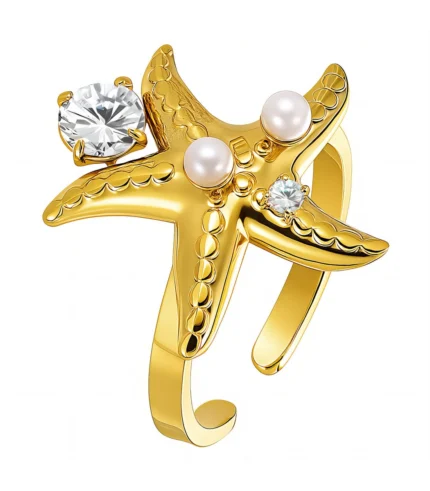
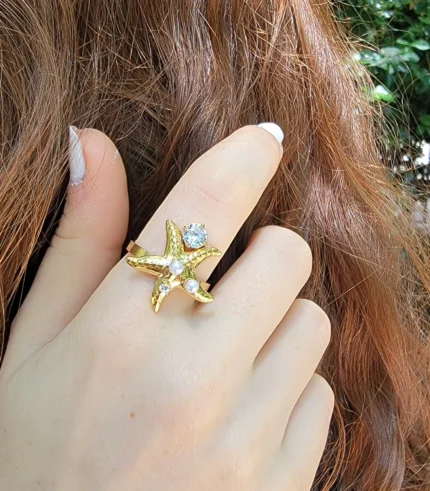
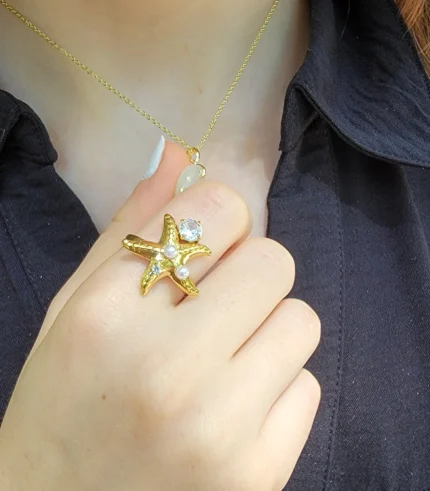
Shop tarnish-free gold-plated rings
View all →
The Hidden Downgrade — From Solid Gold to Hollow Forms and Thinner Bands
The most common cost-reduction strategy has been what the industry calls “smarter engineering.” According to JCK Online’s reporting on jewelry retail trends through 2025 and 2026, brands are producing hollow forms, thinner bands, and weight-efficient designs that reduce gold content while maintaining the same visual appearance. A ring that once weighed four grams might now weigh two, using half the gold at twice the price per ounce, and the consumer sees the same silhouette. Karat downgrading is another quiet shift.
Jewelers are moving from 18K to 14K, and in some cases down to 10K gold, to keep retail prices within familiar ranges. The difference between 18K (75 percent gold) and 10K (41.7 percent gold) is substantial in terms of actual precious metal content, but to an untrained eye, the color difference is minimal. However, if you are buying what you believe is a premium piece and paying premium prices, you should know that 10K gold contains less gold than it does alloy filler.
The limitation here is real: thinner and hollow construction means these pieces are more fragile. A hollow gold bangle that looks identical to its solid predecessor will not survive the same daily wear. Thin bands are more prone to warping.
These are not design innovations. They are cost compromises dressed up as modern aesthetics.
What the Jewelry Industry Does Not Tell You About Base Metals and Allergies
Here is where the material switch becomes a health concern. Some manufacturers label products “nickel-free” but use nickel alloys in the base metal underneath the plating. According to NoNickel.com, when that plating wears down from daily contact with skin, sweat, and water, the nickel-containing base metal is exposed directly to your skin.
Nickel allergies affect 15 to 20 percent of the population, making it the most common metal allergy worldwide. The jewelry industry has a supply chain transparency problem that makes this worse. Brass base metals in cheaper jewelry can contain trace nickel or other irritants, especially when manufacturers source from suppliers without tight quality controls.
Thin plating on high-contact pieces like rings, bracelets, and chains wears through faster than plating on earrings or pendants, which means the pieces you wear most are the ones most likely to expose you to whatever is underneath. Low-quality plating on base metals like nickel or brass also accelerates tarnishing. That green residue on your skin or the dull film that appears after a few weeks of wear is not just cosmetic.
It is a signal that the plating has failed and the base metal is reacting with your body chemistry. This is the specific problem that higher-quality base metals like stainless steel were designed to solve.
How to Choose Jewelry That Looks Like Gold Without the Hidden Risks
The material conversation has shifted from “solid gold versus everything else” to “which alternative actually delivers.” Not all non-gold options are created equal, and understanding the differences protects both your skin and your investment. Stainless steel jewelry costs 30 to 60 percent less than comparable precious metal items, according to Business Research Insights, and it is driving mass-market adoption for good reason. Unlike brass or jeweler’s bronze (a copper alloy that costs roughly $0.36 per ounce compared to gold at $4,400), stainless steel is inherently hypoallergenic, resistant to tarnish, and structurally strong enough to hold its shape through years of daily wear.
Join the KartiKart community
10% off, on top of any current sale, your first order + early access to new collections
Free · No spam · Unsubscribe anytime
When you plate 18K gold over a stainless steel base, the result looks identical to solid gold, but the base metal underneath will not trigger reactions or degrade if the plating thins over time. Sterling Silver 925 is another reliable option, particularly for people who prefer a cooler tone. Gold Plated Sterling Silver 925 gives you warmth and shine with a trustworthy base.
The tradeoff is that sterling silver is softer than stainless steel and requires more attentive storage, but it remains a far better foundation than brass or mystery alloys. The key comparison is not “plated versus solid” but rather “what is under the plating.”.
The Care Myth — Why Plated Jewelry Lasts Longer Than You Have Been Told
One of the persistent misconceptions in the jewelry industry is that gold plated pieces are inherently disposable. This was arguably true a decade ago, when plating technology was less advanced and base metal quality was inconsistent. Modern plating processes have improved dramatically, and durability now depends far more on the base metal and plating thickness than on whether a piece is solid or plated.
The maintenance for 18K Gold Plated Stainless Steel is genuinely simple: remove pieces before swimming or showering, store them in a dry place away from other metals, and wipe them with a soft cloth after wearing. These are not burdensome care rituals. They are the same steps you would take with any piece of jewelry you wanted to keep looking sharp, including solid gold.
The warning worth noting is that not all plating is equal. Cheap plating over cheap base metal will fail quickly. The combination matters.
A well-plated piece over stainless steel will outlast a thinly plated piece over brass by years, even if the brass piece cost more at the register. When evaluating jewelry, ask what the base metal is before you ask about the plating. That single question tells you more about longevity than almost any other detail.
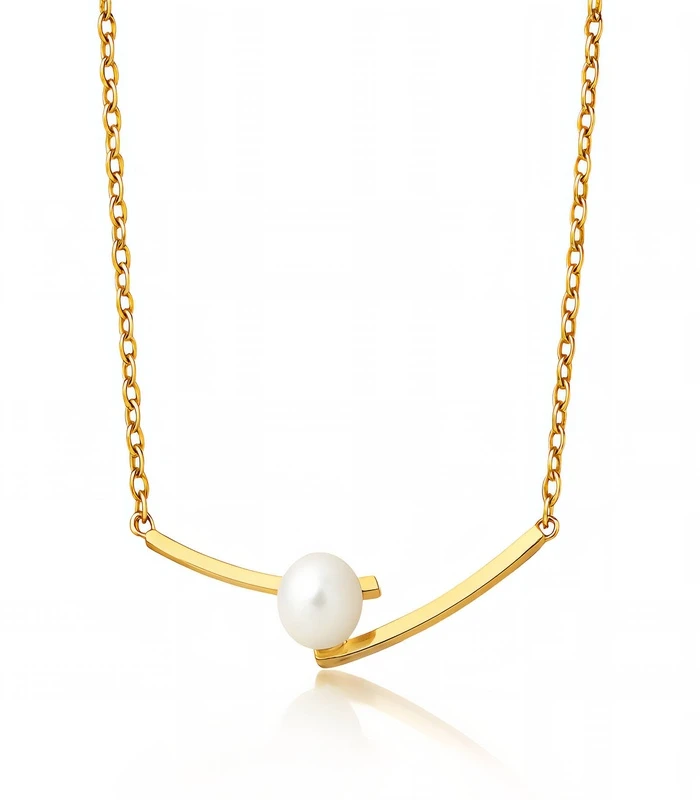
Why Stainless Steel Became the Smart Alternative, Not the Budget One
The jewelry industry used to position stainless steel as a men’s material, something for watches and wedding bands. That framing has collapsed. As gold prices pushed traditional materials out of reach for everyday pieces, stainless steel emerged as the practical center of the market, and designers responded by treating it as a first-class material rather than a fallback.
The shift is visible in the numbers. The stainless steel jewelry market is projected to grow significantly through 2034, driven not by consumers who cannot afford gold but by consumers who recognize that paying thousands for a bracelet they are afraid to wear daily is not a sensible approach to personal style. An 18K Gold Plated Stainless Steel bracelet gives you the warmth and weight of gold, the durability to wear it everywhere, and the freedom to build a collection without agonizing over each purchase.
That is not a compromise. That is a different set of priorities, and increasingly, it is the one that makes the most sense.
Where the Jewelry Industry Goes From Here
Manufacturers are already hedging gold purchases through financial instruments and restructuring production to minimize precious metal use per piece. The broader pivot toward what the industry calls “material diversification” is not slowing down. Palladium, titanium, and stainless steel are being marketed as premium alternatives rather than budget substitutes, and the language around these materials is shifting from apologetic to aspirational.
The parallel with lab-grown diamonds is instructive. What began as a cost substitution is now positioned as an innovation, and consumer acceptance has followed. The same trajectory is playing out with gold alternatives.
Within the next few years, the question will not be “is this real gold” but “does this piece use quality materials, hold up to daily life, and look the way I want it to.” For anyone already wearing 18K Gold Plated Stainless Steel or Sterling Silver 925, you are ahead of that curve.
Looking for minimalist jade jewelry? Browse our full collection of necklaces, bracelets, earrings, and rings at KartiKart. Free shipping on all US orders.
Conclusion
The jewelry industry’s quiet shift to cheaper alloys is not a conspiracy, but it is not transparent either. Rising gold prices forced manufacturers to cut material costs, and many chose methods that prioritize appearance over honesty: thinner construction, lower karat counts, and questionable base metals hidden under plating that will eventually wear through. The consumers who lose in this equation are the ones who do not ask what is underneath the surface.
The consumers who win are the ones who choose materials deliberately. Stainless steel and sterling silver are not consolation prizes. They are functional, hypoallergenic, and durable foundations that pair beautifully with modern gold plating. Knowing what your jewelry is actually made of, and choosing pieces where both the surface and the base are quality materials, is the most practical thing you can do in a market that is counting on you not to look too closely.
You Might Also Like
- Why the Jewelry Industry Exposed to Lab Testing Fails More Than You ThinkWait, let me give you something cleaner and more natural:Why Most Jewelry Sold as Solid Gold Would Fail an Independent Lab Test
- why jewelry brands charge 10x more for the exact same stones you can buy yourself
- What Dermatologists Actually Think About the Jewelry You Sleep In Every Night
From the KartiKart shop
Wear what you just read about
Dainty, everyday pieces, handpicked by a husband-and-wife team. Free U.S. shipping, gift-ready packaging, 30-day easy returns, and 5% of every order goes to organizations fighting human trafficking.
Shop tarnish-free gold-plated rings →