
How Art Deco Jewelry From the 1920s Became Gen Z’s Newest Obsession

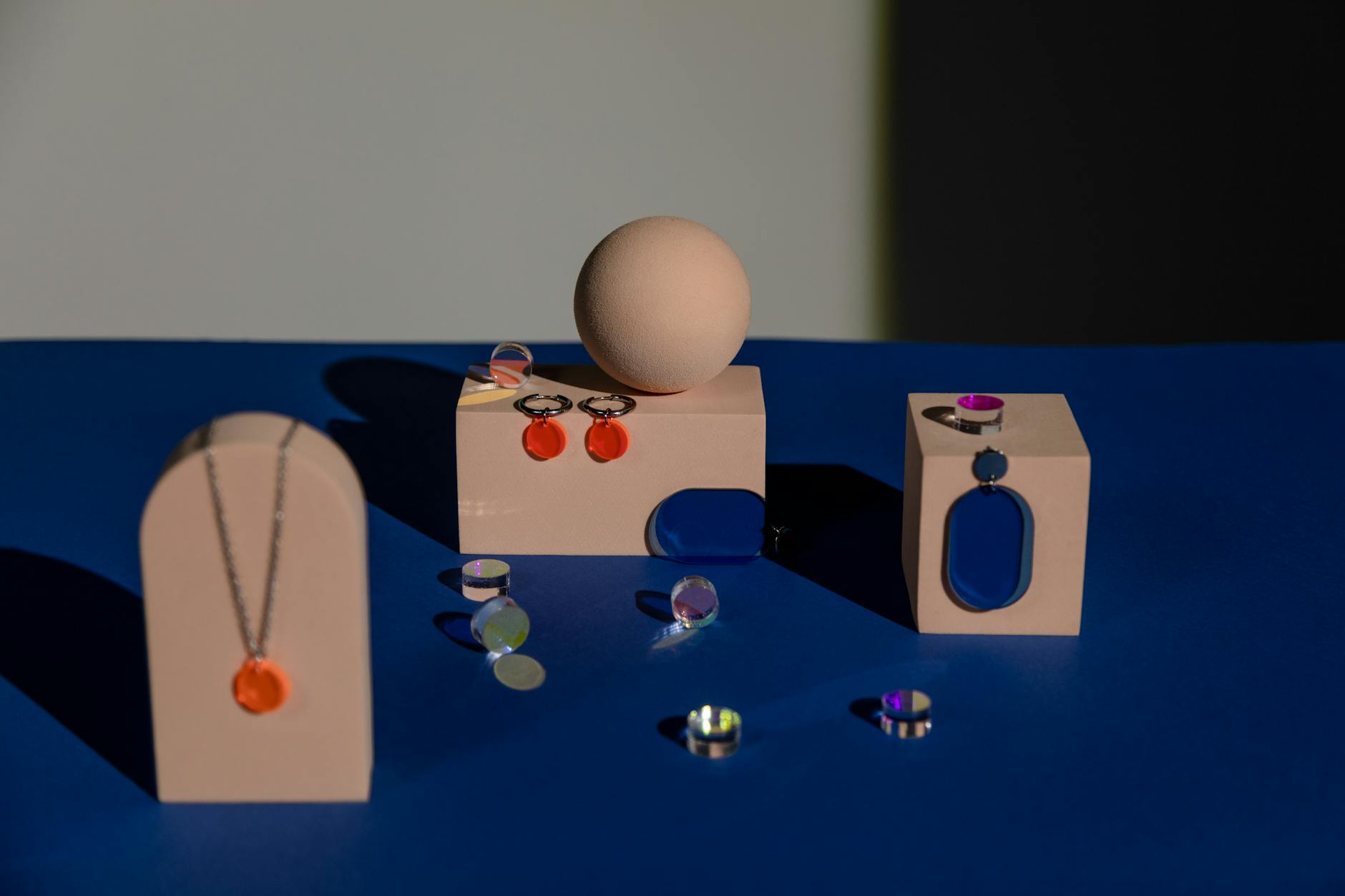
Deco jewelry — the bold, geometric, impossibly glamorous style born in 1920s Paris — has become the single most searched vintage jewelry category online, and the generation driving that search traffic might surprise you. Global Art Deco item sales surged 64% between 2024 and 2025, with millennials and Gen Z now responsible for over 70% of global luxury sales growth. The century-old aesthetic, with its sharp lines, symmetrical patterns, and confident femininity, has found an unlikely second life on TikTok feeds and Pinterest boards belonging to twenty-somethings who were born roughly seven decades after the movement’s peak. This resurgence is not random.
2025 marks the centennial of the 1925 Exposition Internationale des Arts Décoratifs et Industriels Modernes in Paris — the very event that gave Art Deco its name — and the anniversary has triggered major museum exhibitions from Paris to Mumbai. But the centennial is only the spark. Underneath it sits a deeper shift in how younger consumers think about jewelry, sustainability, and personal style. This article breaks down exactly why deco jewelry resonates so powerfully with Gen Z, how the 2025 centennial accelerated the trend, what “Neo Deco” means for modern jewelry in 2026, and how to wear Art Deco-inspired pieces without looking like you raided a costume trunk. Whether you are already stacking geometric gold pieces or just noticing the trend, there is a lot worth understanding here.
Explore our collection of handpicked jade jewelry at KartiKart — minimalist pieces built to last.
Table of Contents
- Why Is Deco Jewelry From the 1920s Suddenly Everywhere on Gen Z’s Radar?
- The 2025 Centennial That Reignited a Global Movement
- Neo Deco Jewelry — How the Original Style Is Being Reimagined for 2026
- How to Actually Wear Art Deco-Inspired Pieces Without Looking Costume-y
- What Gen Z Gets Wrong About Vintage Jewelry — and When Deco Jewelry Is Not the Right Choice
- The Heirloom Remix — Why Melting Down Grandma’s Gold Is the Most Gen Z Thing Possible
- Where Deco Jewelry Goes From Here — the 2026 Outlook
- Conclusion
Why Is Deco Jewelry From the 1920s Suddenly Everywhere on Gen Z’s Radar?
The short answer is that Gen Z shops with values first and aesthetics second — and deco jewelry happens to satisfy both. This generation treats sustainability as a baseline expectation, not a bonus feature. Vintage and antique jewelry fits neatly into that worldview: recycled metals, conflict-free gemstones, and the simple fact that buying something that already exists creates zero new mining demand.
According to reporting from Natural Diamonds, Gen Z and millennial buyers are increasingly drawn to vintage jewelry specifically as an ethical luxury choice. But ethics alone do not explain a 64% sales surge. The aesthetic itself is doing heavy lifting.
Art Deco’s defining characteristics — geometric symmetry, clean lines, bold contrasts, and deliberate repetition — align almost perfectly with the visual language Gen Z already gravitates toward. Think about what performs well on Instagram and TikTok: strong shapes, high contrast, graphic clarity. A fan-shaped deco jewelry piece or a stepped geometric ring photographs beautifully in a flat lay.
It reads instantly on a small screen. The style was designed for drama at a glance, which makes it almost accidentally optimized for social media a full century later. There is also the rebellion factor.
For nearly a decade, minimalism dominated jewelry trends — thin chains, tiny studs, barely-there bangles. Marie Claire now identifies maximalist, ornate jewelry, including Deco-inspired geometric forms, as defining the 2026 aesthetic. Gen Z is not simply discovering Art Deco.
They are using it to push back against the understated look that dominated their older siblings’ jewelry boxes.

The 2025 Centennial That Reignited a Global Movement
The timing of this resurgence is not coincidental. The centennial of the original 1925 Paris exposition has produced a coordinated wave of museum exhibitions and cultural programming worldwide, putting Art Deco back into mainstream conversation at exactly the moment a younger audience was primed to receive it. The Musée des Arts Décoratifs in Paris opened a major exhibition running from October 2025 through April 2026, featuring 1,200 works including jewelry, furniture, fashion, and decorative objects.
In New York, the Museum of the City of New York mounted “Art Deco City” with over 250 pieces of archival material. Milan’s Palazzo Reale staged its own exhibition featuring jewelry, glassworks, and textiles. The centennial programming extends far beyond traditional Western art capitals.
Miami and Mumbai hosted twin-city centenary exhibitions linking their shared Art Deco architectural heritage, a move that broadened the movement’s cultural relevance beyond Europe and the northeastern United States. This global footprint matters because Gen Z is the most internationally connected generation in history — a trend surfacing in Mumbai or Milan reaches Brooklyn or Brisbane within hours through social platforms. However, it is worth noting that museum exhibitions alone rarely drive commercial jewelry trends.
What the centennial actually did was provide legitimacy and language for a shift already underway. Younger buyers who were already drawn to geometric vintage pieces suddenly had a name for what they liked, a history to explore, and a hashtag to follow. The centennial was the catalyst, not the cause.
Neo Deco Jewelry — How the Original Style Is Being Reimagined for 2026
Pinterest has formally predicted “Neo Deco” — modern interpretations of Art Deco design — as a major 2026 trend, with rising searches for geometric patterns, stepped forms, and vintage-modern hybrid aesthetics. This is not about wearing authentic 1920s brooches to brunch. Neo Deco takes the bones of Art Deco — the symmetry, the geometry, the bold metalwork — and renders them in contemporary materials and proportions.
Geometric bezel-set rings, for instance, are highlighted by Who What Wear as a prominent 2026 jewelry trend. What makes Neo Deco distinct from a simple vintage revival is accessibility. Original Art Deco pieces from the 1920s and 1930s command serious prices at auction — Sotheby’s Paris Important Design Sale generated 14.5 million euros in May 2025 alone.
Most twenty-three-year-olds are not bidding at Sotheby’s. Instead, they are buying deco jewelry interpretations: modern pieces in 18K gold plated stainless steel or sterling silver that capture the geometric DNA of the era without the five-figure price tag. This is where modern plating technology becomes genuinely relevant.
Today’s 18K gold plated stainless steel delivers the warm gold tones and visual weight that deco jewelry demands, at a price point that lets you build an actual collection rather than agonize over a single purchase. Pinterest searches for “heirloom jewelry” are up 45%, and this connects directly to the Neo Deco movement. Gen Z does not just want new jewelry that looks old.
According to JCK, younger buyers increasingly want old family gold melted and reset into modern-vintage designs rather than buying new metal entirely. The heirloom remix trend sits comfortably alongside Neo Deco, and both point toward the same underlying desire: jewelry with history, geometry, and a sense of weight — literal and emotional.
How to Actually Wear Art Deco-Inspired Pieces Without Looking Costume-y
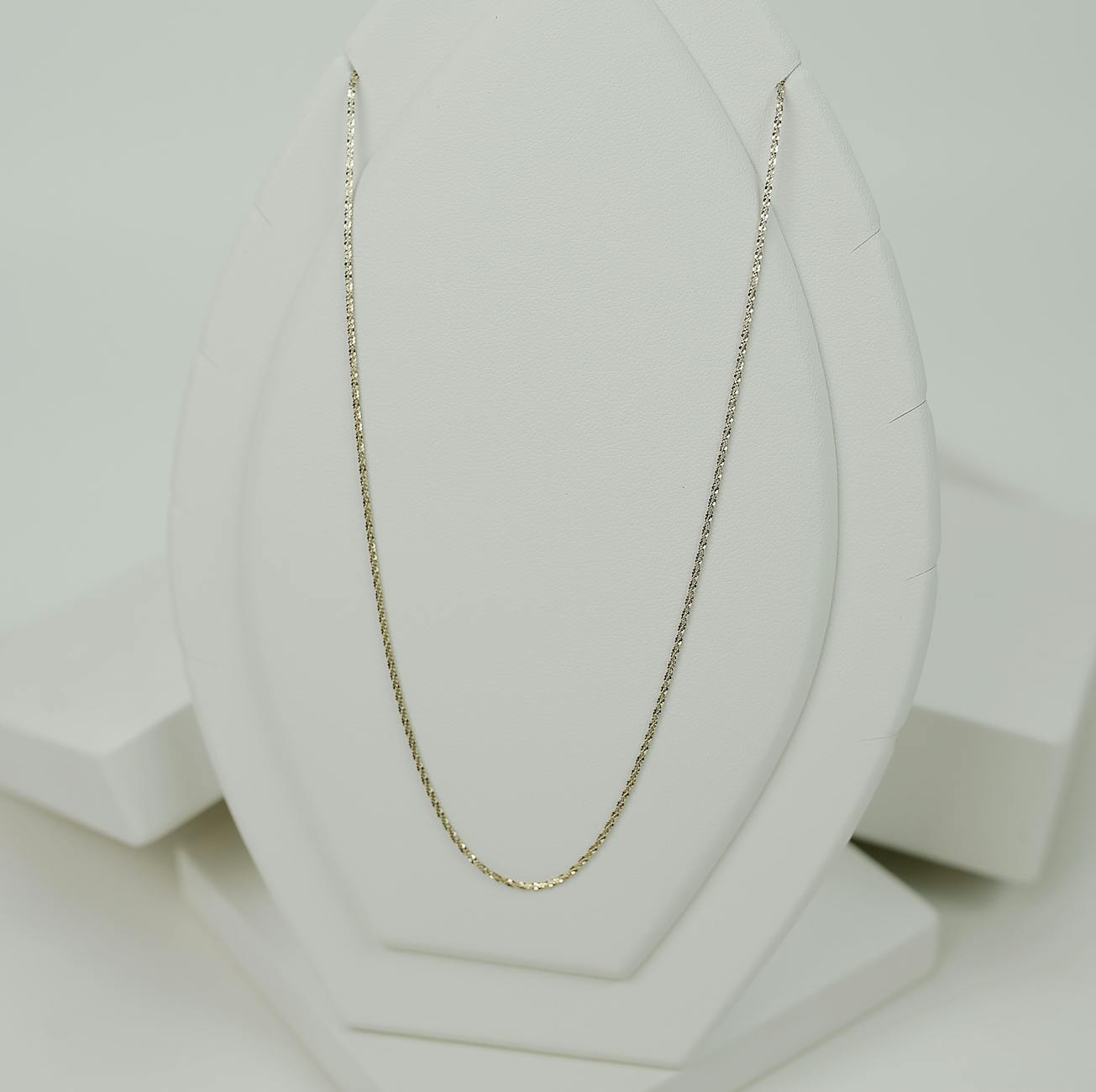
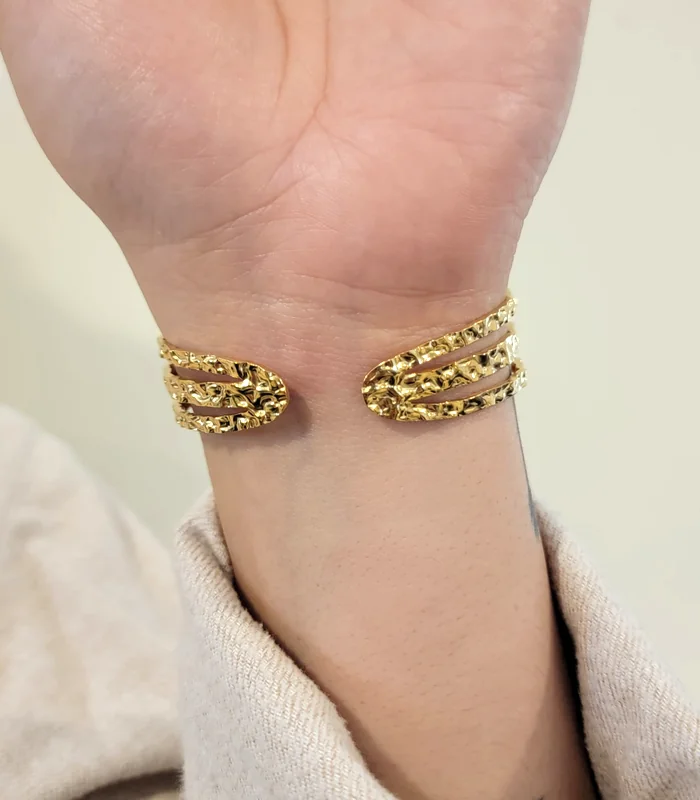
The biggest risk with deco jewelry is tipping from “intentional vintage reference” into “themed costume party.” The key is restraint in quantity, not in the pieces themselves. Art Deco designs are inherently bold — geometric earrings, wide cuff bracelets, fan-shaped pendants — so they work best as a focal point rather than a full coordinated set. One strong deco jewelry piece per outfit is usually the right ratio.
A pair of stepped geometric drop earrings with a simple chain, or a single wide geometric bangle with small studs. The metal color matters more than you might expect. Art Deco originated during a period when platinum and white gold dominated fine jewelry, which is why many authentic pieces have that cool silver tone.
But the style translates beautifully to warm gold, and modern deco jewelry reinterpretations in 18K gold plated stainless steel actually lean into a warmer, more wearable palette that pairs easily with everyday wardrobes. Gold-toned geometric pieces feel current rather than costume-y because they avoid the “museum replica” association that silver-toned pieces can sometimes carry. If you are mixing deco jewelry with your existing collection, aim for consistency in geometry rather than era.
A geometric gold ring from an Art Deco-inspired line stacks naturally with a modern minimalist band because the lines are clean in both. What clashes is mixing ornate Victorian curves with sharp Deco angles — those are fundamentally different design languages. When in doubt, let the deco piece lead and keep everything else simple.
What Gen Z Gets Wrong About Vintage Jewelry — and When Deco Jewelry Is Not the Right Choice
Not every geometric piece is Art Deco, and the label gets applied far too loosely online. Authentic Art Deco jewelry from the 1920s and 1930s has specific hallmarks: strong symmetry, stepped or tiered forms, influences from Egyptian, Aztec, and machine-age motifs, and a preference for contrasting materials like onyx against diamonds or jade against gold. A triangular pendant from a fast fashion brand is geometric, but it is not deco jewelry in any meaningful sense.
Understanding the actual vocabulary helps you make smarter choices whether you are buying vintage or modern interpretations. There are also occasions where the deco aesthetic is simply not the best fit. Job interviews in conservative industries, extremely casual settings, or layered under heavy winter scarves — bold geometric pieces can read as distracting or get physically caught on fabrics.
Deco jewelry works best when it has room to breathe against clean necklines, bare wrists, or pulled-back hair. If your day involves a lot of physical activity or layers, save the statement geometric cuff for the evening. Care is another area where enthusiasm should be tempered with practicality.
If you are wearing gold plated Art Deco-inspired pieces daily, simple maintenance keeps them looking sharp: remove them before showering, store them separately to prevent scratching, and wipe them with a soft cloth after wear. These are not burdensome steps — they take seconds — but skipping them consistently will shorten the life of any plated piece regardless of quality.
The Heirloom Remix — Why Melting Down Grandma’s Gold Is the Most Gen Z Thing Possible
JCK reports that one of the most striking developments heading into 2026 is the heirloom remix trend: younger consumers taking inherited gold jewelry — chains, class rings, broken bracelets — and having it melted down and recast into modern deco jewelry-inspired designs. This is sustainability and sentimentality fused into a single transaction. The gold itself carries family history.
The new geometric form reflects the wearer’s own taste. This trend also explains part of the appeal of affordable modern deco jewelry pieces. Not everyone has inherited gold to remix, and not everyone wants to.
For many Gen Z buyers, an 18K gold plated stainless steel geometric ring or a stepped pendant necklace accomplishes something similar emotionally: it references a historical period they feel connected to, it looks intentional and curated, and it does not require a family vault or a jeweler with a crucible. The beauty of modern deco-inspired pieces is that they let you participate in the aesthetic at whatever level makes sense for your life right now.
Where Deco Jewelry Goes From Here — the 2026 Outlook
All signs point to Art Deco’s influence strengthening through 2026, not fading. JCK projects antique and vintage jewelry having a major commercial moment, with retailers, dealers, and shows investing heavily in the category. The Paris centennial exhibition runs through April 2026, continuing to generate press and social media content.
And Pinterest’s formal designation of “Neo Deco” as a 2026 trend means the algorithm itself will amplify deco jewelry content in discovery feeds for at least the next year. The more interesting question is whether the deco aesthetic will become Gen Z’s long-term signature the way minimalism defined millennial jewelry taste for a decade. The answer is probably more nuanced.
What Gen Z is really signaling is a preference for jewelry with visible design intention — pieces where the geometry, the proportions, and the craftsmanship are obvious at a glance. Art Deco happens to deliver that better than almost any other historical style. Even when the trend eventually evolves, the underlying preference for bold, deliberate, geometric jewelry is likely here to stay.
Looking for minimalist jade jewelry? Browse our full collection of necklaces, bracelets, earrings, and rings at KartiKart. Free shipping on all US orders.
Conclusion
The return of deco jewelry is not a nostalgic blip or a TikTok micro-trend. It is the intersection of a centennial anniversary, a generation that values sustainability and visual boldness equally, and an aesthetic that was practically designed for the social media era a century before it existed. Global sales data, museum programming from Paris to Mumbai, and platform trend forecasts all confirm the same thing: Art Deco is the dominant vintage jewelry influence right now, and its reach is still expanding.
Whether you invest in authentic vintage pieces, commission an heirloom remix, or build a collection of modern deco jewelry interpretations in 18K gold plated stainless steel, the most important thing is understanding what you are drawn to and why. Art Deco rewards intentionality. Every line, every angle, every proportion in the style exists for a reason. The best way to wear it — in any era — is with that same sense of purpose.