Minimalist Jewelry Trends 2026: The Complete Style Guide

Minimalist jewelry trends have taken over the fashion world, and 2026 is proving to be the biggest year yet for clean lines, intentional design, and quality over quantity. Whether you are new to the less-is-more aesthetic or a longtime devotee looking to refresh your collection, this guide to minimalist jewelry trends covers everything from styling tips to material science to building your perfect capsule collection. The quiet luxury movement has permanently shifted how we think about accessories.
Table of Contents
- What Defines Minimalist Jewelry
- Why Minimalist Jewelry Dominates 2026
- Key Minimalist Trends This Year
- How to Style Minimalist Jewelry for Different Occasions
- Minimalist Jewelry Materials Guide
- Building a Capsule Jewelry Collection
- Minimalist vs Statement Jewelry: When to Wear Each
- Caring for Delicate Minimalist Pieces
- Frequently Asked Questions
What Defines Minimalist Jewelry
Understanding minimalist jewelry trends starts with understanding the philosophy behind them. Minimalist jewelry is defined by clean lines, geometric simplicity, and purposeful negative space. Every element serves a function. There is nothing to add, nothing to remove. The piece enhances the wearer rather than overshadowing them.
The roots of minimalist jewelry trends trace back to the Bauhaus movement (1919–1933), where Walter Gropius merged fine art with functional design. Bauhaus jewelers like Naum Slutzky created geometric metal pieces that rejected Victorian excess. Scandinavian designers like Georg Jensen championed organic minimalism — smooth curves and natural forms abstracted to their essence.
Japanese wabi-sabi philosophy also shaped modern minimalist jewelry trends, introducing Western designers to the beauty of asymmetry and understated imperfection. In the 1990s, Elsa Peretti’s iconic designs for Tiffany — the Bone Cuff, the Bean pendant — brought minimalism to the mainstream jewelry world.
Today’s minimalist jewelry trends are characterized by thin profiles, low-relief settings, monochromatic metal tones, and wire gauges typically between 0.5mm and 1.5mm. Bezel and flush settings minimize visible metal around stones. The goal is always intentionality over accumulation — each piece chosen with purpose.
Related reading: The Fine Jewelry Industry | How the Jewelry Industry Is Changing
Why Minimalist Jewelry Dominates 2026
Several powerful forces have converged to make minimalist jewelry trends the dominant aesthetic of 2026. The “everyday fine jewelry” segment — pieces in the $50 to $500 range — has become the fastest-growing category in the global jewelry market, with an estimated 15 to 20 percent compound annual growth rate since 2020.
The quiet luxury movement, popularized by brands like The Row and Brunello Cucinelli and amplified by cultural moments like HBO’s Succession, permanently shifted consumer preferences. In jewelry, quiet luxury means unbranded gold, no visible logos, and quality of metal over size of stones. Minimalist jewelry trends are the perfect expression of this philosophy.
Sustainability is another driving force behind minimalist jewelry trends. The “buy less, buy better” ethos aligns perfectly with minimalist aesthetics. Recycled metals, lab-grown diamonds, and traceable supply chains all favor simpler designs with fewer components. Consumers increasingly demand proof behind sustainability claims, giving minimalist brands an advantage.
Celebrity influence has accelerated minimalist jewelry trends significantly. Hailey Bieber’s “clean girl aesthetic” made dainty gold hoops and thin chains a cultural uniform. Zendaya’s understated personal jewelry, Meghan Markle’s consistent use of quiet elegance, and K-pop idols wearing subtle pieces have pushed these trends across every market and demographic.
Economic factors also play a role in the rise of minimalist jewelry trends. Inflation-conscious consumers favor versatile pieces that work across multiple outfits and occasions. Cost-per-wear logic strongly favors minimalist pieces worn daily over statement jewelry worn only occasionally. Simple gold pieces also hold their resale value significantly better than fashion jewelry, making them a smarter long-term purchase.
Related reading: Jewelry Brand Pricing Explained | Ethical Jewelry: What to Know
Key Minimalist Trends This Year
Dainty Chains and Layering
Ultra-fine chains remain foundational to minimalist jewelry trends in 2026. Cable, box, and Singapore chains in 0.6mm to 1.0mm widths are the building blocks of every layered look. Herringbone chains — flat, fluid, and reflective — have graduated from breakout trend to modern classic. Satellite chains with tiny spaced beads offer subtle texture.
Layering is the art of minimalist jewelry trends. The standard formula is two to four necklaces at staggered lengths: 16 inches for a choker effect, 18 inches as the standard layer, and 20-plus inches for depth. Individual pieces layered freely are preferred over pre-made layered necklaces, giving you maximum versatility.
Stacking Rings and Ear Curation
Thin bands of 1mm to 2mm width, designed to be worn three to seven at a time, define ring-based minimalist jewelry trends. The concept of a “ring wardrobe” — buying coordinated sets in mixed textures like hammered, polished, and single-stone — lets you customize your look daily. Midi rings worn above the knuckle in minimal wire gauges add another dimension. Signet rings, once exclusively masculine, now serve as anchor pieces around which thinner stacking bands orbit.
The curated ear, popularized by fine jewelry piercer Maria Tash, treats multiple piercings as a unified design. Three to five piercings per ear, mixing tiny hoops, flat-back studs, threader earrings, and ear cuffs, is the 2026 standard for minimalist jewelry trends. Huggie hoops in 10mm to 14mm diameter are the essential workhorse.
Geometric Shapes and Mixed Metals
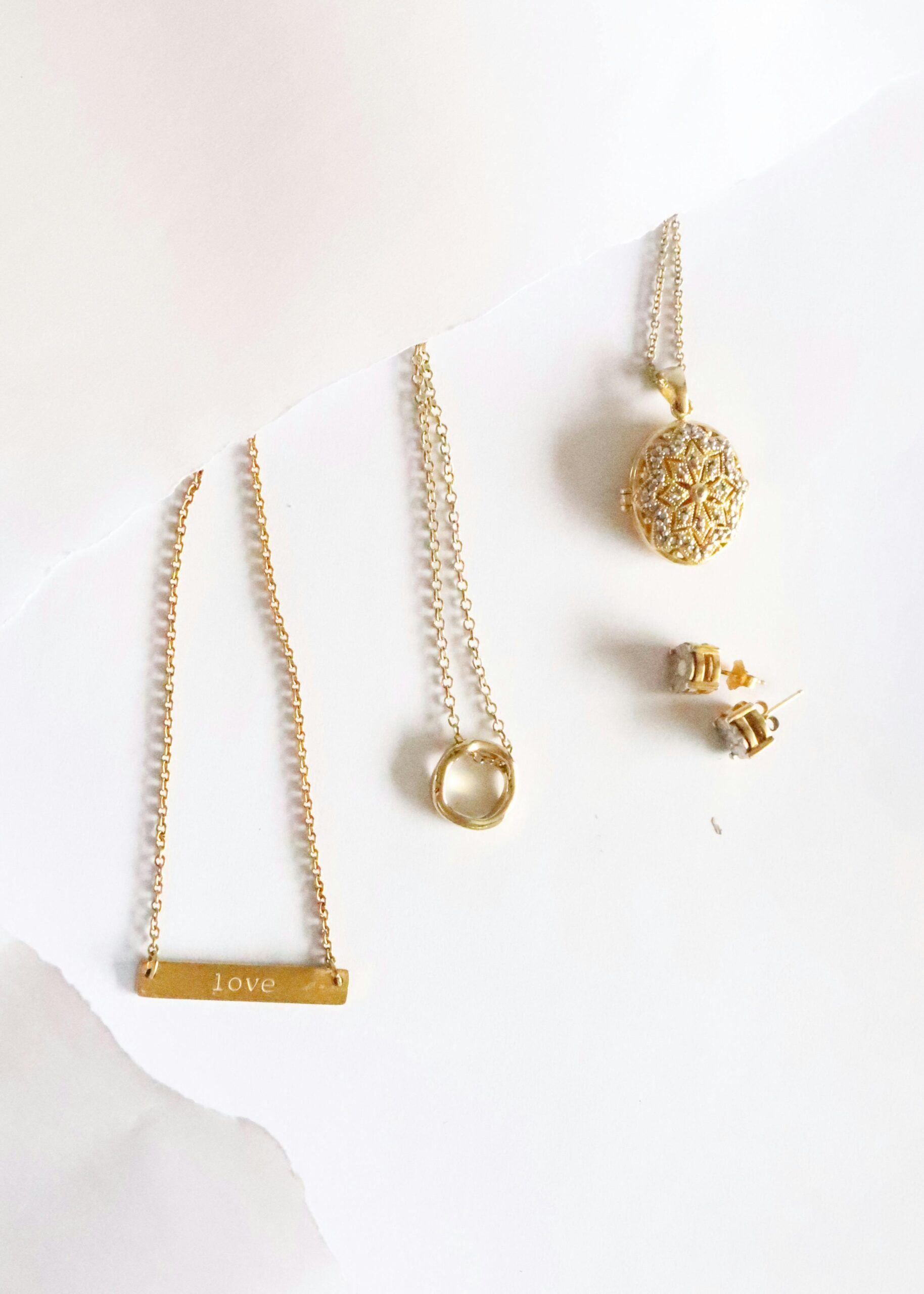
Clean geometric forms — circles, triangles, hexagons, and abstract curves — continue to define minimalist jewelry trends. Bar necklaces and earrings, arc earrings that follow the ear’s natural shape, and mobius-twist rings are all trending. Minimalist design celebrates the beauty of pure form.
The old rule of matching all metals is completely dead. Mixed metals are not just accepted in minimalist jewelry trends — they are actively encouraged. Gold and silver on the same piece or deliberately combined across a layered look creates visual depth. Two-tone pieces help bridge the mix and make it look intentional.
Related reading: Signet Rings and the Old Money Aesthetic | The Vintage Jewelry Comeback
How to Style Minimalist Jewelry for Different Occasions
Work and Office
Professional minimalist jewelry trends call for restraint and cohesion. Start with a single pendant necklace at 16 to 18 inches, small hoop or stud earrings, and one watch or bracelet. Stick to one metal family for a polished look. Avoid dangling earrings that interfere with phone calls and clinking bangles that disrupt meetings.
Casual and Everyday
Casual settings are where minimalist jewelry trends really shine through layering. Stack two to three necklaces, build a wrist combination of chain bracelets and thin bangles, and show off your curated ear. Mixed metals work perfectly here. Anklets and body chains in ultra-fine single strands add warm-weather personality.
Date Night and Formal
For date night, elevate your minimalist jewelry trends by adding one sparkle element — a tiny diamond stud, a tennis bracelet, or a crystal-accented pendant. Threader earrings paired with a bare décolletage and a single meaningful pendant is a timeless formula. For black-tie events, choose one or two impactful pieces in solid gold or platinum. Quality of material reads as luxury at formal events.
Bridal
Minimalist bridal jewelry is the dominant trend in 2026. Delicate hair pins, small drop earrings, and a simple bracelet let the dress take center stage. Solitaire diamond or pearl studs are the safest choice for ceremony photos. Matching minimalist pieces for bridesmaids double as practical gifts they will actually wear again.
Related reading: How to Choose Jewelry: Expert Tips | Pearl Jewelry Trends
Minimalist Jewelry Materials Guide
Choosing the right material is essential to making minimalist jewelry trends work for your lifestyle and budget. Here is every option you need to understand.
Sterling Silver (925)
Sterling silver contains 92.5 percent pure silver with 7.5 percent copper alloy. It is affordable, hypoallergenic for most people, and produces a bright white finish. The downside: it tarnishes when exposed to air and moisture. Anti-tarnish rhodium plating helps but wears off after 6 to 24 months. Sterling silver is excellent for minimalist jewelry trends on a budget.
Gold Plated vs Gold Filled vs Solid Gold
Gold plated pieces have a thin layer (0.5 to 2.5 microns) electroplated onto a base metal. They look great initially but last only 6 months to 2 years before fading. Gold filled is fundamentally different — a thick gold layer mechanically bonded under heat and pressure, containing at least 5 percent gold by weight. Gold filled lasts 10 to 30 years and is arguably the best value in minimalist jewelry trends.
Solid gold is the ultimate choice for minimalist jewelry trends that last a lifetime. 14K (58.3 percent gold) offers the best balance of durability and color for everyday wear. 18K (75 percent gold) is the European luxury standard with a richer tone. Both will never tarnish, fade, or cause reactions. A basic 14K thin chain necklace runs $150 to $400.
Stainless Steel (316L) with PVD Coating
Surgical-grade stainless steel has become a game-changer for affordable minimalist jewelry trends. It is scratch-resistant, tarnish-proof, hypoallergenic, and incredibly durable. When finished with 18K gold PVD (Physical Vapor Deposition) coating, stainless steel looks identical to solid gold at a fraction of the price.
PVD bonds gold at the molecular level, lasting two to five-plus years of daily wear — far longer than traditional electroplating. This technology is a key reason why accessible minimalist jewelry trends exploded in the 2020s. Stainless steel PVD is the ideal choice for active lifestyles, waterproof daily wear, and anyone who wants the look of solid gold without the premium price tag.
Platinum and Titanium
Platinum is the most prestigious option for minimalist jewelry trends. At 95 percent pure in jewelry form, it is naturally white, never needs rhodium plating, and is completely hypoallergenic. It costs roughly 1.5 to 2 times the price of equivalent 18K gold. Titanium is the lightest metal option — 45 percent lighter than steel — and is ideal for people with severe metal allergies.
Related reading: Ethical Jewelry: Responsible Sourcing | Shop Our Best Sellers
Building a Capsule Jewelry Collection
A capsule jewelry collection is the ultimate expression of minimalist jewelry trends. Borrowed from the capsule wardrobe concept, the idea is to curate 8 to 12 high-quality pieces that mix, match, and cover every styling need — replacing a drawer full of costume jewelry with intentional investment pieces.
The Essential Eight Pieces
Every capsule collection built around minimalist jewelry trends should include these foundations. First, small huggie hoops (10 to 15mm) — the most versatile earring that works with every outfit. Second, simple studs in diamond, pearl, or gold ball for quieter days. Third, a thin chain necklace (16 to 18 inches) as the foundation for layering or solo wear.
Fourth, a pendant necklace (18 to 20 inches) with a small meaningful charm — initial, birthstone, or symbol — for personality. Fifth, a thin bangle or chain bracelet as your daily wrist piece. Sixth and seventh, two rings: one thin stacking band and one slightly bolder signet or single-stone ring. Eighth, a slim watch or open cuff to complete the collection.
Investment Priorities
When budgeting for minimalist jewelry trends, spend the most on earrings — they sit closest to your face and are most visible in photos and video calls. Necklaces are the centerpiece of most outfits and deserve the second-highest investment. Rings come third, followed by bracelets which are often hidden by sleeves.
Start with gold-filled or stainless steel PVD for your first capsule, then upgrade to solid gold one piece at a time as budget allows. A functional five-piece starter set — hoops, studs, chain, pendant, and one ring — can be assembled for $150 to $300 in quality materials. The key principle of minimalist jewelry trends is that five excellent pieces will always outperform twenty mediocre ones.
Related reading: How to Choose Jewelry | Shop Our Jade Collection
Minimalist vs Statement Jewelry: When to Wear Each
Understanding when to choose each style is essential knowledge for anyone following minimalist jewelry trends. Minimalist and statement jewelry are not opposites — they are tools for different situations.
When Minimalist Wins
Choose minimalist jewelry trends for professional settings, job interviews, and meetings where credibility matters. When your outfit itself makes a statement through pattern, color, or texture, minimalist jewelry prevents visual competition. First dates, understated social gatherings, and all-day wear also call for the minimalist approach. When the focus should be on you, not your accessories, minimalist wins.
When Statement Wins
Statement jewelry shines when paired with simple, monochrome outfits that need a focal point — a black dress plus bold earrings is a timeless combination. Creative industry events, art openings, celebrations, and parties all welcome statement pieces. The key rule: one statement piece at a time, with everything else kept minimal.
The Balance Rule
The “one plus rest” formula bridges minimalist jewelry trends with bolder pieces. If you wear one bold necklace, pair it with small studs and bare wrists. Bold earrings pair with a bare neck or the thinnest possible chain. Two competing statement pieces always look unintentional. Transition pieces — medium hoops, chunky-but-plain gold chains — help when you cannot decide.
Related reading: Vintage Jewelry: When Bold Works | Fine Jewelry Industry Insights
Caring for Delicate Minimalist Pieces
Delicate pieces require thoughtful care to maintain the quality that minimalist jewelry trends demand. Thin chains and fine details are beautiful but need attention.
Cleaning
Soak pieces in warm water with a drop of mild dish soap for five to ten minutes. Use a soft-bristle baby toothbrush to gently clean chain links and settings. Rinse under warm running water while holding securely, then pat dry with a lint-free microfiber cloth. For sterling silver tarnish, use a dedicated polishing cloth. Ultrasonic cleaners are safe only for solid gold and platinum — never for plated, filled, or pieces with porous stones.
Preventing Tarnish and Damage
The golden rule for preserving minimalist jewelry trends pieces: “last on, first off.” Jewelry is the last thing you put on after dressing, perfume, and lotion. It is the first thing you remove when you get home. Remove before showering, swimming, exercising, and applying any chemicals. Chlorine is particularly devastating to all metals except surgical stainless steel.
Store each piece in its own compartment to prevent tangling and scratching. Anti-tarnish strips placed in storage boxes absorb sulfur compounds that accelerate tarnish. For travel, use a dedicated jewelry roll or hard-shell case with individual slots. Thread chains through drinking straws to keep them straight during transport. Carry valuables in your carry-on, never checked luggage.
Repair Tips
Thin chains under 1mm are most prone to breakage. A jeweler can solder most breaks for $15 to $40. Vermeil pieces can be re-electroplated for $20 to $50 when the gold layer wears through. Keep original packaging — many quality brands offer manufacturing defect warranties. Investing in minimalist jewelry trends means treating your pieces as long-term companions that deserve professional maintenance.
Related reading: Pearl Jewelry Care Tips | How to Choose Jewelry That Lasts
Frequently Asked Questions
These are the most common questions people ask about minimalist jewelry trends.
Is minimalist jewelry just cheap jewelry?
Absolutely not. Minimalist refers to design aesthetic, not material quality. A thin 18K solid gold chain with a single diamond pendant can cost over $500. Minimalist jewelry trends span every price point from $15 stainless steel to $5,000 platinum. The philosophy is intentional restraint, not budget constraint.
Can minimalist jewelry be worn in water?
It depends on the material. Solid gold, platinum, and stainless steel are waterproof. Gold-filled handles occasional water exposure. Gold-plated, vermeil, and sterling silver should never be submerged — moisture accelerates tarnish and plating degradation. Many brands now market waterproof collections for active lifestyles.
Is it okay to mix gold and silver jewelry?
Yes. The old matching rule is completely outdated. In 2026, mixing metals is a core part of minimalist jewelry trends. The key is balance — roughly equal distribution looks intentional, while a single mismatched piece can look accidental. Two-tone pieces help bridge mixed-metal looks seamlessly.
How many pieces should I wear at once?
For a polished minimalist look, aim for three to five pieces total. For a layered or curated look, up to seven to ten pieces works if each individual piece is simple. The test: if any single piece feels like it needs justification, you may be wearing too many. Minimalist jewelry trends celebrate restraint.
What is the best metal for sensitive skin?
In order of hypoallergenic reliability: implant-grade titanium, platinum, niobium, solid 14K-plus gold, surgical stainless steel 316L, and then sterling silver. Avoid brass, copper, and mystery alloy base metals. Minimalist jewelry trends favor these skin-safe materials because daily wear demands comfort.
Is minimalist jewelry a passing trend?
Minimalism in jewelry is not a passing trend — it is a design philosophy with roots going back over a century to the Bauhaus movement. While specific minimalist jewelry trends cycle, the overall movement toward clean, intentional, quality-over-quantity jewelry has only accelerated. Sustainability concerns and digital-native aesthetics continue to reinforce minimalist preferences for years to come.
What is the best starter piece for minimalist jewelry?
A pair of small gold huggie hoops. They work with every outfit from casual to formal, sit close to the face for maximum visibility, and are incredibly versatile. Start with gold-filled or stainless steel PVD for $20 to $50, then upgrade to solid gold when budget allows. Huggie hoops are the single most recommended starting point in minimalist jewelry trends.
How do I tell quality minimalist jewelry from fast fashion?
Check the material. Quality pieces clearly state their composition — 14K gold, 925 sterling, 316L stainless steel. Vague descriptions like “gold tone” or “alloy” signal costume quality. Weight matters: quality metals feel substantial even in thin gauges. Finally, check the clasp — lobster and spring-ring clasps in matching metal indicate care that fast fashion skips.
Shop Our Minimalist Collection
Explore our curated selection of 18K gold stainless steel jewelry — minimalist design, maximum impact.
Sources
This guide to minimalist jewelry trends draws on research from leading fashion and gemological authorities: