How Victorian Mourning Jewelry Inspired Today’s Dark Aesthetic Trend

Mourning jewelry — the black-draped, hair-woven, symbolism-heavy adornments born from Victorian grief — is the unlikely ancestor of one of fashion’s fastest-growing aesthetics. When Queen Victoria lost Prince Albert in 1861, she spent the remaining four decades of her reign in mourning dress, turning jet brooches, onyx pendants, and human hair lockets into social requirements for grieving women across Britain. That era’s obsession with beautiful darkness never truly disappeared. It simply went underground, resurfacing in punk, goth subcultures, and now a mainstream dark aesthetic movement that the U.S.
Gothic fashion industry values at $1.4 billion as of 2022, with projections reaching $2.3 billion by 2032. The connection between a Victorian widow’s jet brooch and a 2026 cross earring from Klarna’s trending searches is more direct than most people realize. The same materials — onyx, dark gemstones, blackened metals — and the same emotional impulse — wearing your inner world on your body — drive both movements. This article traces that lineage from mourning lockets to modern dark jewelry trends, examines the cultural forces accelerating this revival, and offers practical ways to incorporate the aesthetic into your own collection without committing to a full gothic wardrobe.
Explore our collection of handpicked jade jewelry at KartiKart — minimalist pieces built to last.
Table of Contents
- What Was Victorian Mourning Jewelry and Why Does It Still Influence Dark Fashion?
- The Gothic Revival by the Numbers — How Big Is This Trend Really?
- From Mourning Jewelry to Dark Academia — How Victorian Symbols Live On in Social Media
- How to Wear the Dark Aesthetic Without Going Full Gothic
- Collecting Victorian Mourning Jewelry — What to Know Before You Buy
- Dark Gemstones Worth Knowing — Onyx, Jet, and Their Modern Alternatives
- Where the Dark Aesthetic Goes From Here
- Conclusion
What Was Victorian Mourning Jewelry and Why Does It Still Influence Dark Fashion?
Victorian mourning jewelry was never simply about sadness. It was a codified language of love, loss, and social expectation, with strict rules governing which materials and styles were appropriate at each stage of grief. Key materials included jet from Whitby, England, black enamel, onyx, seed pearls meant to symbolize tears, and — most strikingly to modern eyes — human hair woven into intricate brooches and pendants.
A banded agate and diamond mourning locket from 1861 containing a miniature photograph and a lock of hair sold for $45,264 at auction, demonstrating that these pieces were never throwaway trinkets. What made mourning jewelry culturally powerful was its insistence that adornment could carry emotional weight. Every piece told a story about someone who was loved and lost.
That idea — jewelry as emotional narrative rather than mere decoration — is exactly what resonates with today’s dark aesthetic community. Modern designers from Cartier to Sofer Jewelry have created pieces that reference the Victorian mourning era’s dramatic sensibility, and the love for onyx, black diamonds, and dark sapphires in contemporary fine jewelry descends directly from those 19th-century traditions. The difference is intention.
Victorian women wore mourning jewelry because society demanded it. Today’s wearers choose dark aesthetics because they want to. That shift from obligation to self-expression is what transformed a rigid mourning code into a creative movement.

The Gothic Revival by the Numbers — How Big Is This Trend Really?
The dark aesthetic is no longer a niche subculture hiding in the corners of the internet. FashionUnited declared the gothic aesthetic “a dominant trend” in fashion in September 2025, and the numbers support that claim. Klarna’s payment data reveals surging demand for gothic-inspired jewelry specifically: cross-shaped rings are up 85%, bat-shaped rings up 69%, and cross earrings up 120%.
Within a global jewelry market valued at approximately $310.90 billion and projected to exceed $460 billion by the early 2030s, dark aesthetics are claiming a growing share. However, trend data comes with a caveat. Surging search interest and payment data do not always translate into sustained purchasing habits.
Some of this growth is driven by seasonal spikes around Halloween and film releases rather than year-round demand. If you are a collector or investor buying Victorian mourning jewelry for appreciation, understand that the trend could stabilize or shift. The pieces themselves hold historical and craftsmanship value regardless of trend cycles, but paying inflated trend-driven prices for contemporary dark jewelry carries more risk.
That said, trend forecasters see staying power here. For autumn/winter 2026-27, forecasters predict a new gothic movement called “New Dynasties” featuring radical silhouettes with dramatic, sculptural designs in black and deep red. Who What Wear identified darker, more dramatic aesthetics as one of the six jewelry trends set to define 2026.
This is not a flash moment — it is a cultural current with deep historical roots.
From Mourning Jewelry to Dark Academia — How Victorian Symbols Live On in Social Media
The “dark academia” and “witchy” aesthetics popular on TikTok and Instagram explicitly draw from Victorian mourning jewelry symbolism and materials. Crosses, serpents, lockets, black stones, and memento mori imagery — all staples of the Victorian mourning tradition — populate these feeds daily. The 2025 gothic jewelry trends feature pieces adorned with lace motifs, spikes, dark gemstones, and rings with occult symbols and animal motifs, all of which trace their visual DNA back to mourning-era design.
Film and television have accelerated this crossover dramatically. Netflix’s Wednesday series turned Jenna Ortega into a dark style icon. Beetlejuice Beetlejuice arrived in September 2024, and Robert Eggers’ Nosferatu followed in December 2024 — both films saturating popular culture with gothic imagery at the exact moment mourning jewelry aesthetics were already trending upward.
These are not coincidences. Entertainment both reflects and amplifies existing cultural appetites. What is genuinely new is the audience.
Victorian mourning jewelry now attracts collectors interested in death studies, social history, and symbolic jewelry — a significant shift from decades when such pieces were considered morbid and unmarketable. The stigma has flipped entirely. Wearing a piece that references mortality is now seen as intellectually sophisticated rather than unsettling.

How to Wear the Dark Aesthetic Without Going Full Gothic
You do not need a wardrobe of black velvet to participate in this trend. The most wearable approach is contrast — pairing one or two dark-toned or symbolically rich pieces against clean, modern basics. A black onyx pendant against a white blouse.
A cross ring stacked with simple gold bands. Dark gemstone studs with a minimalist chain necklace in 18K Gold Plated Stainless Steel. The tradeoff is between commitment and versatility.
Authentic Victorian mourning jewelry — real jet, antique hairwork — makes a strong statement but limits your outfit options and requires careful handling of fragile, century-old materials. Contemporary pieces inspired by the mourning jewelry tradition, especially those in durable materials like stainless steel with gold plating, give you the aesthetic without the fragility. Modern plating technology has greatly improved durability, making it practical to wear dark-inspired gold pieces daily without the anxiety of damaging an irreplaceable antique.
A stacking approach works especially well. Combine a dramatic statement piece — something with weight and symbolism — with quieter everyday jewelry. The contrast between the two creates visual tension that mirrors the Victorian tradition’s own tension between beauty and grief, elegance and darkness.
Collecting Victorian Mourning Jewelry — What to Know Before You Buy
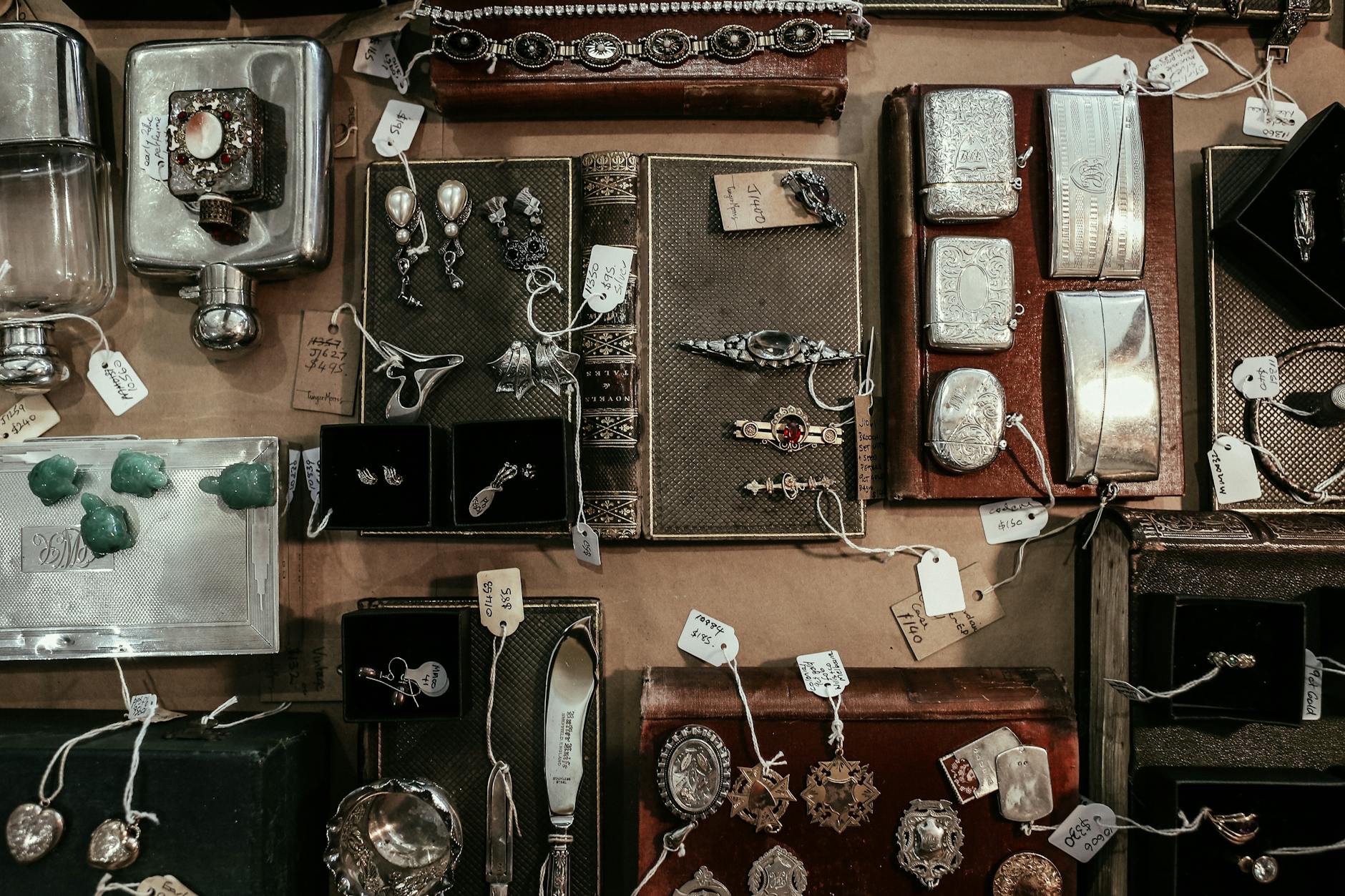
If you are drawn to actual antique mourning jewelry rather than modern interpretations, the market is more accessible than you might expect. Most Victorian mourning pieces remain “quite affordable” for collectors, with examples like Victorian hairwork crosses priced around $225 to $265. The high-end collector market exists — that $45,264 mourning locket proves it — but entry-level collecting is surprisingly reasonable.
The limitation is condition and authentication. Victorian jet is brittle and chips easily. Hairwork can deteriorate if exposed to humidity or light.
Black enamel cracks. Before purchasing, examine pieces carefully or buy from reputable dealers who specialize in antique jewelry. Be cautious of “Victorian-style” reproductions sold at antique prices — the market has seen an increase in replicas as demand grows.
One genuine advantage of collecting antique mourning jewelry is sustainability. These pieces represent recycled precious materials with no new mining impact — a selling point that resonates strongly with environmentally conscious buyers. Victorian jewelry also commands stable or appreciating values due to superior hand-craftsmanship compared to modern mass production.
Each piece was made individually, not stamped out by machines, and that shows in the detail work.

Dark Gemstones Worth Knowing — Onyx, Jet, and Their Modern Alternatives
The original mourning jewelry palette centered on jet, onyx, and black enamel, each with distinct properties. Jet is fossilized wood — lightweight, warm to the touch, and capable of taking a high polish, but fragile. Onyx is a form of chalcedony — harder and more durable, still widely used in contemporary jewelry.
Black enamel was the workhorse option, applied to gold and silver pieces to create the required dark appearance without relying on gemstones. Today’s dark aesthetic jewelry expands that palette considerably. Black sapphires, black diamonds, dark garnets, smoky quartz, and even darkened sterling silver offer modern alternatives with better durability for daily wear.
If you want the mourning jewelry look without the antique price tag or fragility concerns, pieces in 18K Gold Plated Stainless Steel paired with dark stones or black enamel accents deliver the visual impact at an accessible price point — and you can rotate through different styles without the guilt of a major investment.
Where the Dark Aesthetic Goes From Here
The mourning jewelry revival is part of a larger cultural shift toward jewelry that means something. After years of minimalist, nearly invisible jewelry dominating trends, consumers are gravitating toward pieces with narrative, symbolism, and emotional weight. The Victorian mourning tradition — arguably the most emotionally loaded jewelry movement in Western history — provides a rich visual and symbolic vocabulary for designers and wearers alike.
Looking ahead, the convergence of dark aesthetics, sustainability-driven antique collecting, and social media’s appetite for visually striking jewelry suggests that mourning jewelry’s influence will continue to grow through 2026 and beyond. The 5% annual growth rate projected for the gothic fashion industry reflects genuine cultural embedding, not a passing costume trend. Whether you collect authentic Victorian pieces or incorporate dark-inspired modern jewelry into your rotation, you are participating in a tradition that has been expressing love, loss, and identity through adornment for over 160 years.
Looking for minimalist jade jewelry? Browse our full collection of necklaces, bracelets, earrings, and rings at KartiKart. Free shipping on all US orders.
Conclusion
Victorian mourning jewelry created the template for meaningful dark adornment — the idea that jewelry could simultaneously be beautiful and emotionally heavy, decorative and deeply personal. Every modern cross earring, onyx ring, and dark gemstone pendant exists in conversation with that tradition, whether the wearer knows it or not. The $1.4 billion gothic fashion industry and surging demand for dark-toned jewelry are not trends emerging from nowhere.
They are the latest chapter in a story that began with a grieving queen and her jet brooch. If this aesthetic speaks to you, start where you are. A single dark-toned piece paired with your existing jewelry is enough to begin. Whether that means a vintage mourning brooch, a contemporary onyx pendant, or a simple black and gold stacking ring in 18K Gold Plated Stainless Steel, the point is the same one Victorian women understood instinctively — what you wear can carry meaning far beyond decoration.