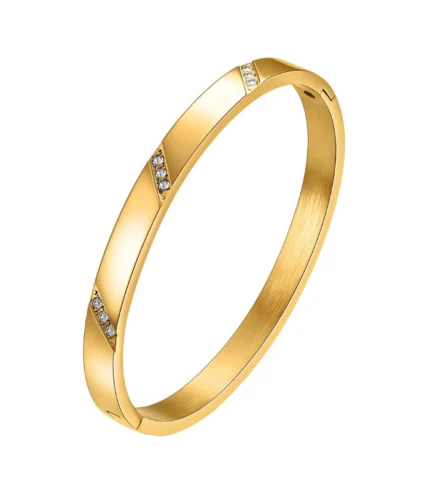
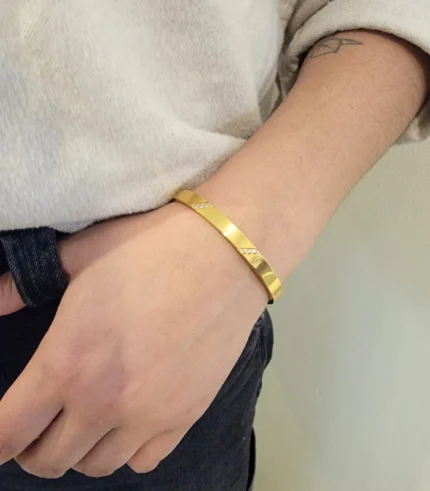
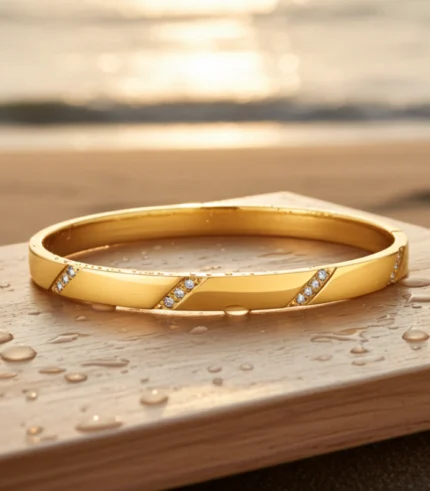
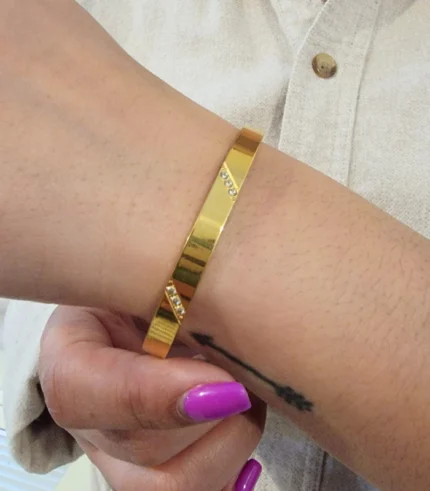
For the days you decide to keep moving forward ✨ The diagonal line is a small symbol of momentum – never quite standing still, always leaning toward what’s next. Made in 18k gold plated stainless steel with a hinged bangle clasp.
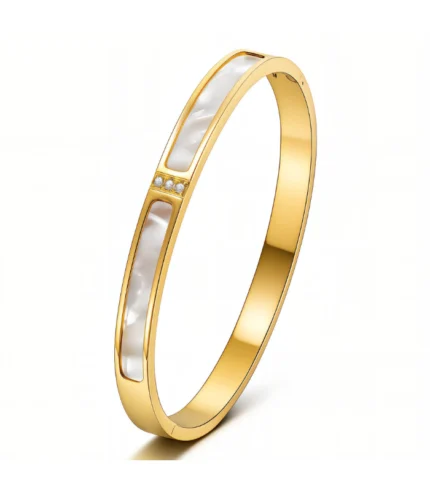
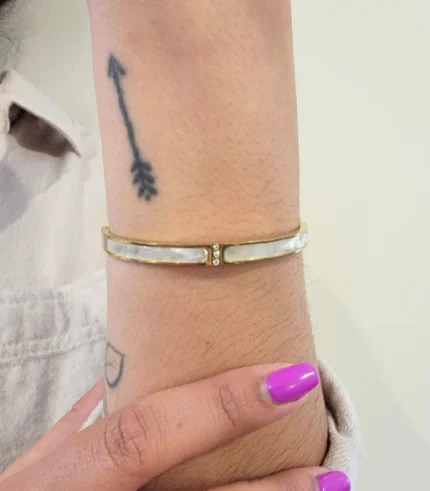
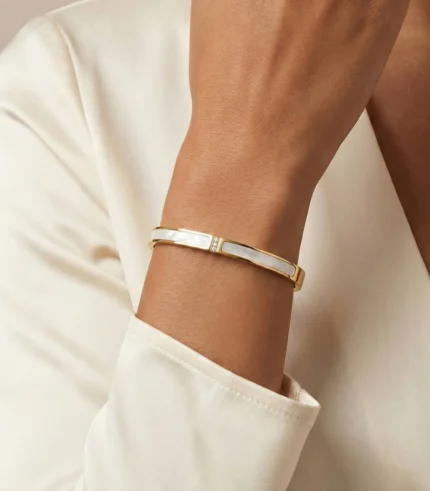
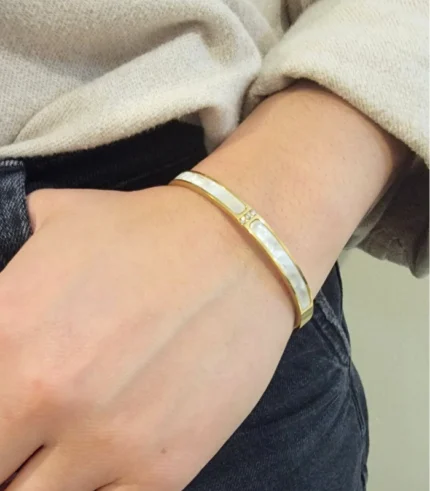
The kind of piece you put on once and forget to take off ✨ Its unbroken circle stands for wholeness and continuity — no beginning, no end, just something that stays with you. Made in 18k gold plated stainless steel with a soft ivory inlay and a clear sparkle along the band.
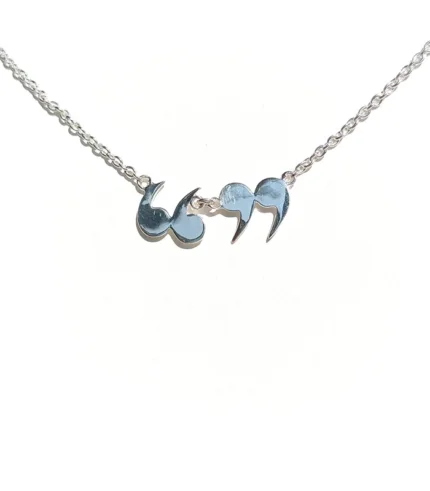
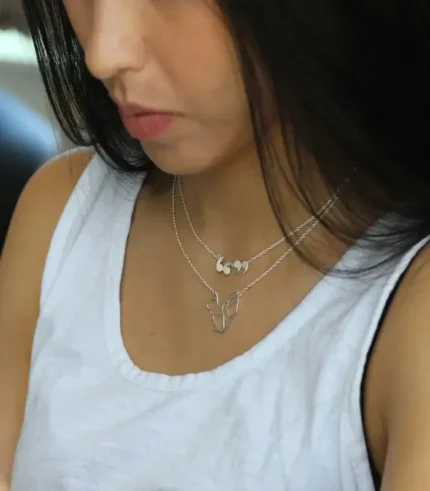
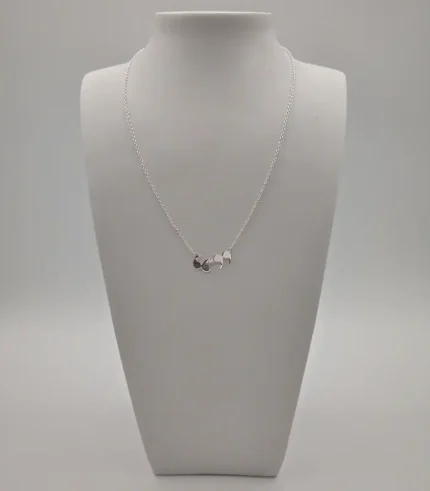
Necklace embracing the Quotation Mark. While not exactly quotation marks, the earliest indicators for quoted speech can be traced back to the ancient Greeks. They used a symbol called the “diple” (a chevron shape) in the margin to draw attention to noteworthy passages, not necessarily quotations. During the Middle Ages and Renaissance, the focus shifted from marginal notations to incorporating marks within the text itself. Early iterations involved double commas or forward slashes at the beginning and end of quotations. By the 18th century, the double quotation mark became increasingly favored, likely due to the invention of metal type sets that made them easier to use in printing. While the double quotation mark became dominant in many Western countries, variations emerged elsewhere. For example, some languages like French use guillemets (« ») or angle brackets (‹ ›) for quotations.