Why Most Jewelry Marked Hypoallergenic Actually Contains the Metals That Irritate Your Skin
Jewelry marked “hypoallergenic” sits in a regulatory gray zone that most shoppers know nothing about — and that gap between expectation and reality is where skin reactions happen. The United States has no federal standard, no legal definition, and no required testing for the term “hypoallergenic” on jewelry. The FDA does not define it. The FTC does not regulate it beyond requiring that marketing claims be substantiated under Section 5 of the FTC Act. That means any manufacturer can stamp “hypoallergenic” on a product without proving it meets any threshold for safety, and no government agency will stop them.
The result is a market flooded with jewelry marked as safe for sensitive skin that actually contains nickel, lead, cadmium, and other known irritants buried in the base metal or alloy. A national study by Vermont PIRG found that 57% of jewelry products tested contained high levels of one or more hazardous chemicals — and that included pieces sold with hypoallergenic claims. Over 18% of people in North America are allergic to nickel, according to the American Academy of Dermatology, which means roughly one in five customers buying jewelry marked for sensitive skin may still react to what they are wearing. This article breaks down why these labels fail, which metals actually cause problems, how European regulations expose the gap in U.S. consumer protection, and what to look for when choosing jewelry that will not leave your skin red, itchy, or blistered.
Explore our collection of handpicked jade jewelry at KartiKart — minimalist pieces built to last.
Table of Contents
- Why Is Jewelry Marked Hypoallergenic Still Causing Allergic Reactions?
- The Metals Hiding Inside Common Jewelry Alloys
- What Happens When Jewelry Marked Nickel Free Actually Contains Nickel
- How to Actually Tell If a Piece of Jewelry Will React With Your Skin
- Why the U.S. Lags Behind Europe on Jewelry Safety Standards
- Who Is Most at Risk and Why Women Bear the Greater Burden
- Choosing Jewelry That Actually Protects Sensitive Skin
- Conclusion
Why Is Jewelry Marked Hypoallergenic Still Causing Allergic Reactions?
The core issue is that “hypoallergenic” is a marketing term, not a safety certification. There are also no U.S. government standards for the term “nickel free.” Some manufacturers define “nickel free” as meaning the plating layer is free of nickel, while the base metal underneath contains nickel alloys.
When plating wears thin — through normal daily wear, exposure to sweat, or contact with water — the nickel beneath reaches your skin directly. You bought jewelry marked to protect you, and it does the opposite once the surface layer breaks down. This is not a rare edge case.
A systematic review published through NCBI found that 34.5% of earrings sourced from Asia and 31.1% from North America exceeded safe nickel release levels. Compare that to European earrings, where critical nickel release was identified in 11.3% of products — still too high, but significantly lower due to actual regulation. The distinction matters because most affordable jewelry sold online in the U.S.
is manufactured overseas, often in regions with no enforceable nickel limits. Without third-party testing or standardized thresholds, the word “hypoallergenic” on a product listing tells you almost nothing about what is actually in the metal touching your skin.
The Metals Hiding Inside Common Jewelry Alloys
Not every metal that looks safe is safe. White gold, for instance, frequently contains nickel as the alloy that gives it its silver-white color. Sterling silver — even genuine 925 silver — can contain trace amounts of nickel or reactive copper that trigger contact dermatitis in sensitized individuals.
Non-surgical grades of stainless steel can leach nickel over time. Brass and bronze, popular in fashion jewelry, contain copper and zinc that oxidize against skin and cause green discoloration or irritation. However, not all stainless steel is created equal, and this is where material grade becomes critical.
Surgical-grade stainless steel, specifically implant-grade steel meeting ASTM F138 standards, binds nickel tightly enough within its chromium-oxide structure that it does not migrate into the skin at rates that cause reactions for most people. Standard 304 or 201 stainless steel — what you find in most fashion jewelry marked as “stainless steel” — does not offer the same protection. If a product simply says “stainless steel” without specifying the grade, assume it is not implant-grade.
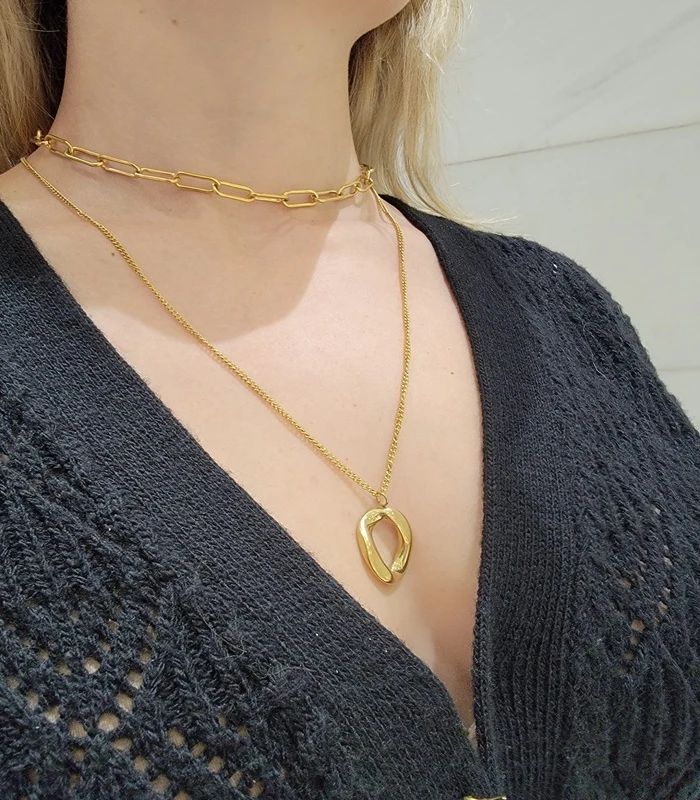
Truly hypoallergenic metals with strong clinical evidence include pure titanium, niobium, and platinum. These are excellent but come at significantly higher price points, which is why high-quality 18K gold plated Stainless Steel has become a practical choice — you get the look and weight of fine jewelry with a skin-safe base metal, as long as the stainless steel grade and plating quality are sound.
What Happens When Jewelry Marked Nickel Free Actually Contains Nickel
The Vermont PIRG study produced numbers that should concern anyone who relies on label claims. Out of 95 jewelry items tested, 30 — that is 31.6% — contained more than 100 parts per million of nickel. Even more striking, 92 out of 95 items (96.8%) contained more than 100 ppm of chromium.
Four products contained over 10% cadmium, a known carcinogen with no business being in anything worn against the skin. Nickel causes reactions through a specific mechanism. When nickel contacts sweat or moisture, it breaks down into a nickel salt that penetrates the outer layer of skin and activates the immune system, triggering allergic contact dermatitis — the most common form of metal allergy.
Symptoms include redness, itching, blistering, and in chronic cases, dry cracked skin that resembles a burn. Once sensitized, the allergy is lifelong. There is no cure, no desensitization treatment, and no way to reverse it.
You can only avoid the trigger. This is why jewelry marked “nickel free” that actually contains nickel in its base metal is not just misleading — it can cause a permanent health change. A single piece of jewelry that exposes someone to enough nickel can create an allergy they carry for the rest of their life, affecting not just what jewelry they wear but their tolerance for belt buckles, watch backs, eyeglass frames, and even medical devices.
How to Actually Tell If a Piece of Jewelry Will React With Your Skin
The most reliable approach is to focus on material composition rather than label claims. Look for specific metal grades and verified material descriptions. 18K Gold Plated Stainless Steel, when built on a quality stainless steel base, offers a strong barrier between your skin and any trace elements in the alloy.
The 18K gold plating itself is nickel-free, and modern plating technology has improved durability to the point where well-maintained pieces hold up through regular wear. If you are already sensitized to nickel, you can purchase inexpensive nickel testing kits — typically using dimethylglyoxime solution — that detect nickel on the surface of jewelry within seconds. The test involves applying a drop of solution to a cotton swab and rubbing it on the metal.
Join the KartiKart community
10% off, on top of any current sale, your first order + early access to new collections
Free · No spam · Unsubscribe anytime
A pink or red reaction indicates nickel presence. This is not a perfect substitute for laboratory analysis, but it catches the most obvious offenders and costs under ten dollars for a kit that tests dozens of items. The tradeoff is this: testing only detects nickel on the current surface.
It will not tell you what is in the base metal that may become exposed as plating wears. This is why the quality of plating and the composition of the base metal both matter. A well-plated piece on a clean stainless steel base is a fundamentally different product from a thinly plated piece on a nickel-heavy brass alloy — even if both carry identical “hypoallergenic” labels.
Why the U.S. Lags Behind Europe on Jewelry Safety Standards
The European Union regulates nickel in jewelry through the REACH Regulation (Annex XVII, Entry 27), which sets specific nickel migration limits: less than 0.2 micrograms per square centimeter per week for piercing jewelry, and less than 0.5 micrograms per square centimeter per week for other jewelry in prolonged skin contact. Testing follows the EN 1811:2023 standard, updated in December 2023, which measures nickel release by immersing jewelry in artificial sweat solution under controlled conditions. The United States has no equivalent federal nickel release limit for adult jewelry.
Lead limits exist for children’s products under CPSC guidelines — 27% of jewelry in the Vermont PIRG study exceeded the 300 ppm lead threshold for children’s items — but adults are essentially unprotected by federal regulation. This means jewelry marked for the U.S. market faces no mandatory testing for the very metals that cause the most widespread allergic reactions.
This regulatory gap has a measurable impact. The systematic review comparing earring safety across regions found that jewelry sold in EU-regulated markets had significantly lower rates of dangerous nickel release (11.3%) compared to products from North America (31.1%) and Asia (34.5%). Regulation works — the U.S.
simply has not implemented it for adult jewelry.

Who Is Most at Risk and Why Women Bear the Greater Burden
Nickel allergy affects up to 17% of women compared to just 3% of men globally, with women affected three to ten times more frequently. The primary driver is piercing: a meta-analysis of 5,333 people found that nickel allergy is significantly associated with piercings, with an odds ratio of 5.9. Ear piercing, in particular, creates a direct pathway for nickel to enter the body through broken skin, and the first earrings worn during healing are often inexpensive fashion studs with high nickel content.
An estimated 11 million children in the U.S. are affected by nickel allergy, many of them girls who received their first ear piercings with jewelry marked as hypoallergenic or nickel free. The EDEN Fragrance Study found age-standardized nickel sensitization prevalence across Europe at 14.5%, ranging from 8.3% in Sweden — where nickel regulation has been in place since the 1990s — to 18.5% in Portugal.
Sweden’s lower rate after decades of regulation is strong evidence that limiting nickel exposure prevents sensitization.
Choosing Jewelry That Actually Protects Sensitive Skin
The future of jewelry safety will likely involve better labeling standards and consumer awareness rather than waiting for U.S. federal regulation. In the meantime, the smartest approach is to buy from brands that disclose their actual materials — not just marketing terms — and to choose metals with proven biocompatibility.
18K Gold Plated Stainless Steel remains one of the most accessible options that combines style with skin safety, offering the warmth and sophistication of gold at a price point that lets you build a full collection without the anxiety of a four-figure purchase. Easy maintenance keeps your pieces performing well: store them separately to prevent scratching, remove them before swimming or showering, and wipe them down after wear. These are small habits, not inconveniences, and they extend the life of the plating that protects both the appearance and skin-safety of your jewelry.
When a label says “hypoallergenic,” let it be the start of your research, not the end of it.
Looking for minimalist jade jewelry? Browse our full collection of necklaces, bracelets, earrings, and rings at KartiKart. Free shipping on all US orders.
Conclusion
The word “hypoallergenic” on jewelry is not a guarantee — it is a claim that no U.S. agency verifies, no standard defines, and no testing requirement supports. Jewelry marked with this term can and frequently does contain nickel, lead, cadmium, and other metals that cause allergic reactions in millions of people. The statistics are clear: over 18% of North Americans are allergic to nickel, more than half of jewelry tested contains hazardous chemicals at concerning levels, and the U.S. has no federal nickel release limits for adult jewelry.
Protecting your skin means looking past the label. Understand what metals are in your jewelry, choose verified materials like 18K Gold Plated Stainless Steel or implant-grade alloys, and test pieces if you have known sensitivities. The jewelry industry will not regulate itself, and the U.S. government has not stepped in. Until that changes, informed choices are your best defense against the invisible metals that turn a beautiful accessory into a source of chronic irritation.