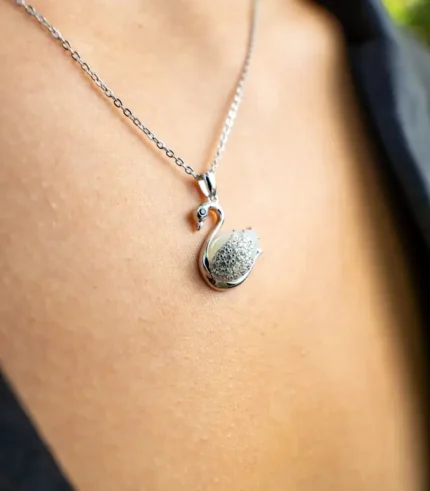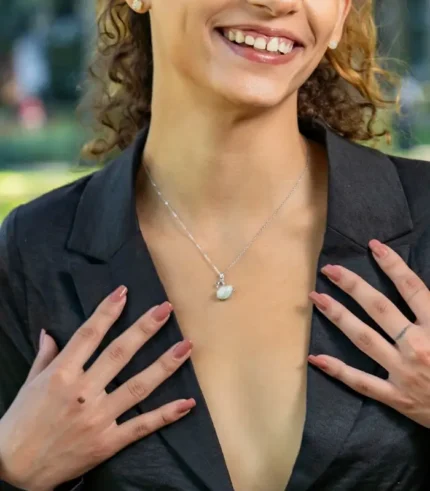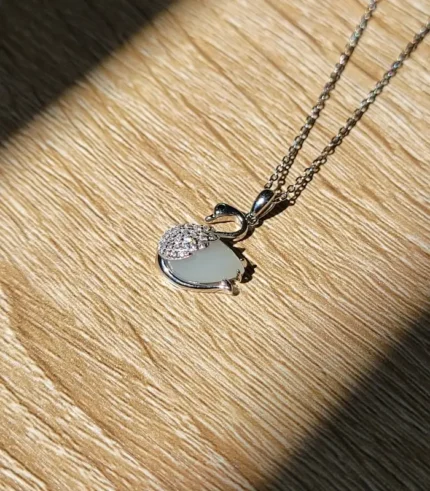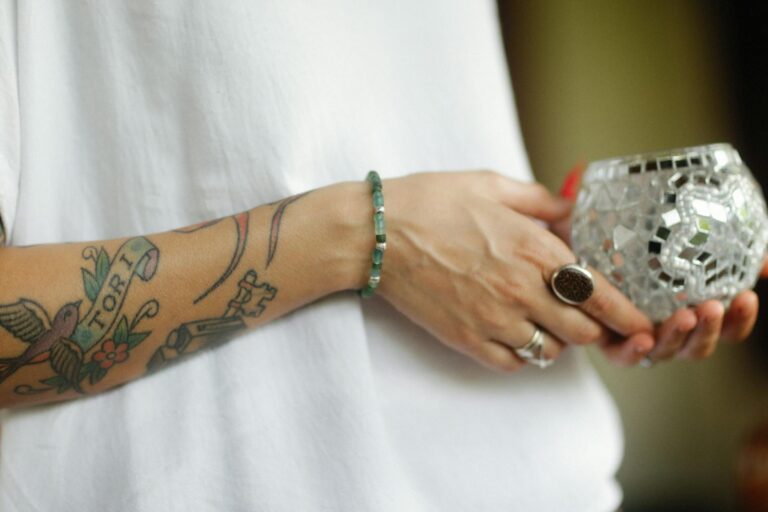
How to Photograph Jade Jewelry to Show Its True Color
Photograph jade jewelry under the wrong light, and even the finest imperial green looks dull on screen. Jade is not like other gemstones. Its interlocking crystal structure scatters light internally. This creates a glow that shifts dramatically with your lighting and camera setup. According to the Table of Contents
gia.edu/jade-quality-factor”>Gemological Institute of America (GIA), jadeite’s value depends on three key factors: color, transparency, and texture. All three are directly affected by how you photograph jade jewelry. A photo that misrepresents color can mislead buyers or hide a stone’s best qualities. These techniques apply whether you shoot nephrite bangles or jade set in 18K gold plated stainless steel. The right approach reveals the stone’s true character every time.
Why Lighting Is Everything When You Photograph Jade Jewelry
Jade gets its color from trace elements inside the stone. Jadeite owes its vivid green to chromium. That is the same element that colors emeralds. Nephrite gets its softer green from iron. However, both minerals react strongly to light color temperature. Incandescent bulbs shift green jade toward olive. Fluorescent lights introduce blue or green color casts. Neither shows the stone’s true hue. Warm lighting flatters skin tones but distorts gemstone color. The wrong light can make a prized imperial jade look like a common imitation.
The ideal color temperature to photograph jade jewelry is between 5000K and 5600K. This range mimics clean natural daylight. Continuous LED panels typically work better than flash. Flash creates harsh highlights on polished jade surfaces. Place a diffuser between your light source and the stone. Tracing paper, white cloth, or a light tent all soften shadows effectively. For best results, use two lights at 45-degree angles on each side of the piece.
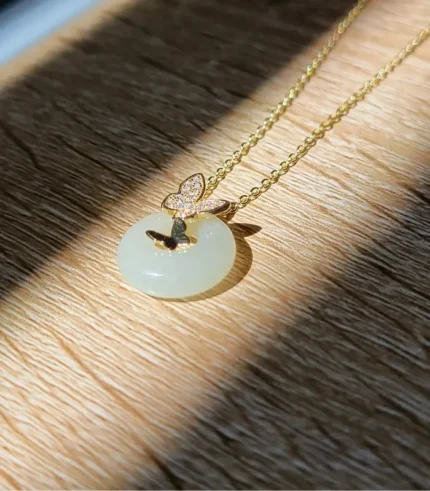
Light direction also shapes the final image. Side lighting reveals surface texture and polish quality. For example, overhead diffused light shows the overall shape. It also lets jade’s translucency come through naturally. When you photograph jade jewelry in a gold setting, diffused lighting matters most. It captures both the stone’s glow and the metal’s warmth without competing reflections. Avoid mixing light sources with different color temperatures in a single shot.
Shop white & blue jade jewelry
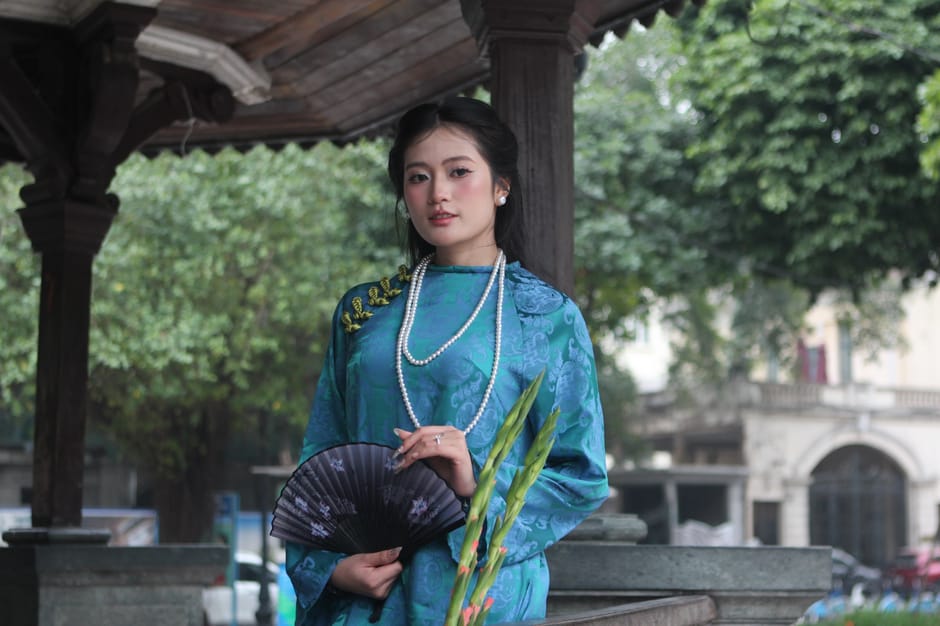
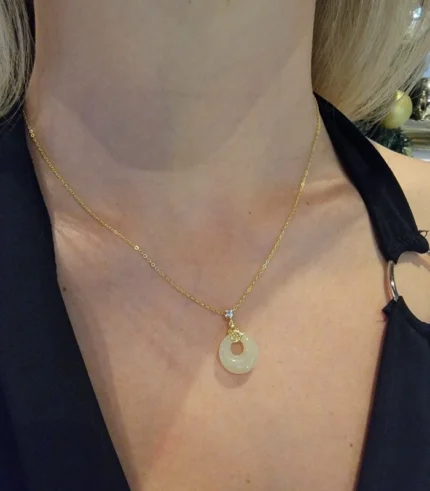
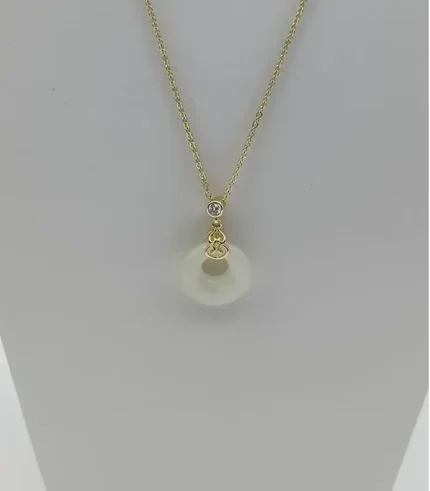
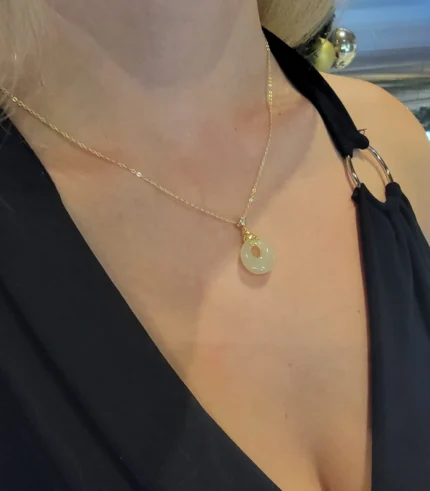
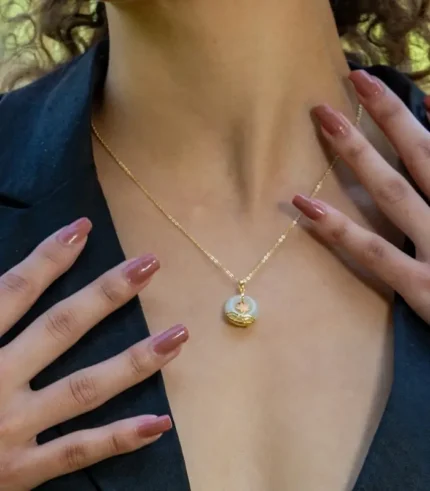
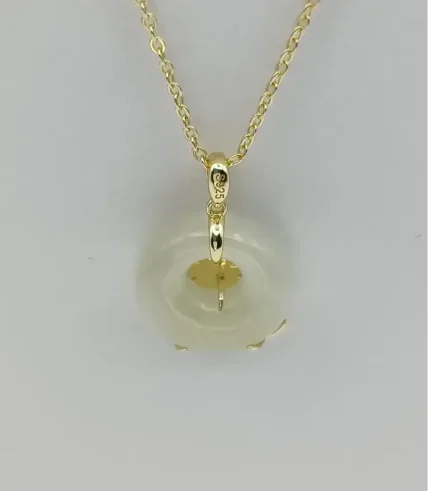
View all →Genuine White Jade Bi Disc Necklace in 14K Gold Plated Silver
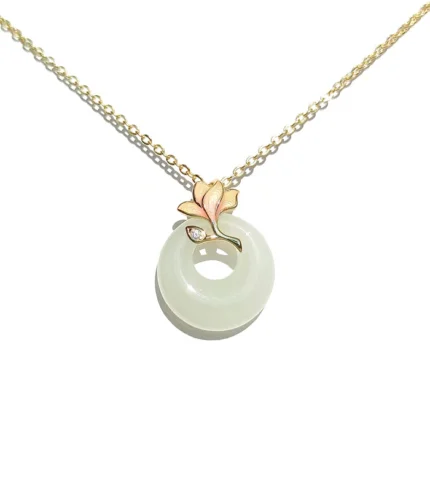
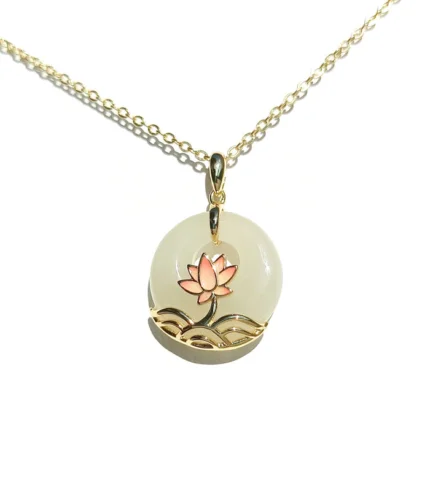
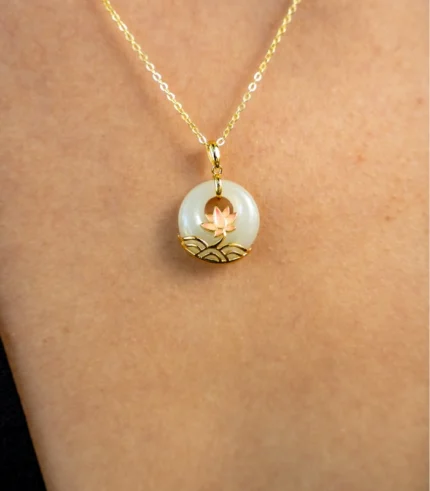
Original price was: $85.00.$76.50Current price is: $76.50.Genuine White Jade Lotus Necklace
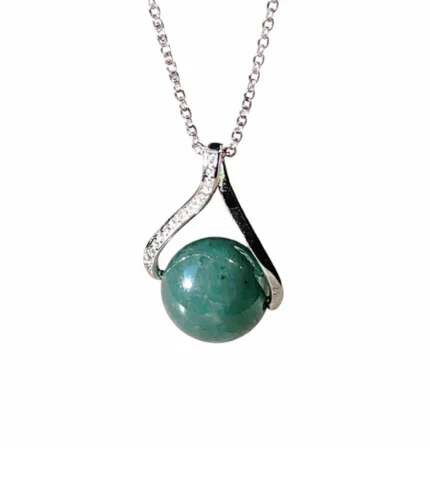
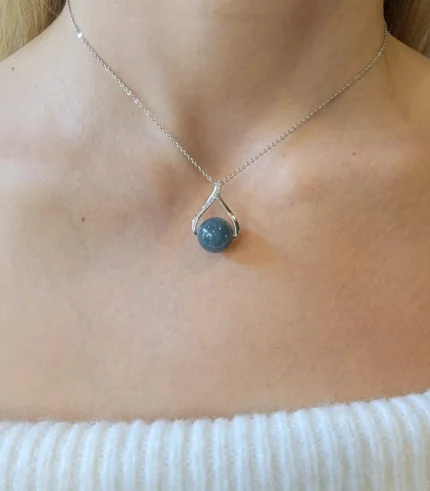
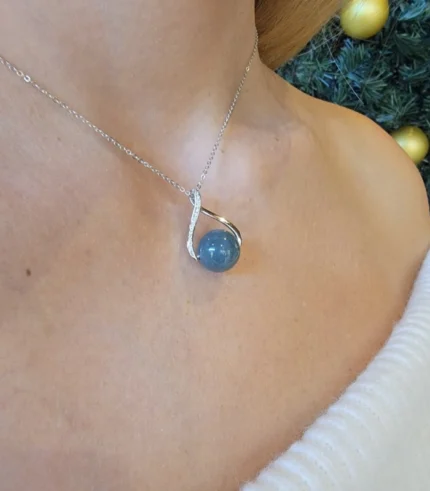
Original price was: $85.00.$76.50Current price is: $76.50.Genuine Blue Jade Round Necklace in Sterling Silver
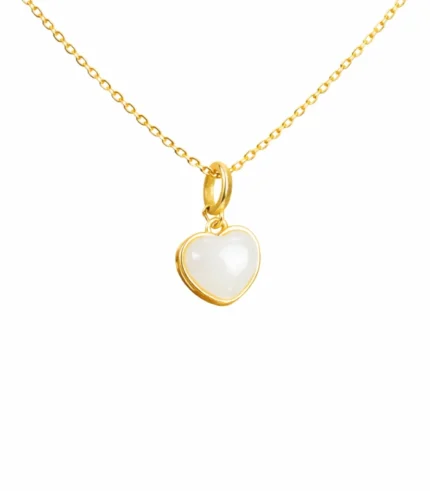
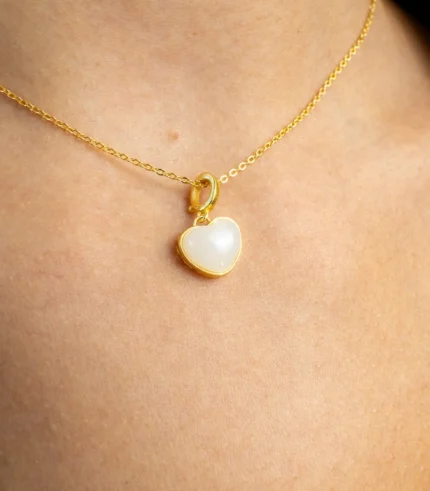
Original price was: $85.00.$76.50Current price is: $76.50.Genuine White Jade Heart Pendant Necklace in 14K Gold Plated Sterling Silver
Original price was: $85.00.$76.50Current price is: $76.50.

Camera Settings for True Jade Color
Your camera’s white balance has the biggest impact on jade’s on-screen color. Auto white balance shifts unpredictably between shots. It often makes jade look yellowish or unnaturally cool. Instead, set a custom white balance using a gray card. This gives you a neutral reference point. Without that baseline, every photo will carry a slight color tint. Aim for 5000K to 6500K to photograph jade jewelry without distortion.
Set your aperture between f/8 and f/11 for sharp depth of field. Keep ISO at 100 or 200 for clean, noise-free images. Typically, a shutter speed of 1/125 to 1/250 second works with studio lights. Always shoot in RAW format. RAW files let you fine-tune white balance after the session. This preserves your ability to correct any color shifts later.
Slightly underexposing by -0.3 to -0.7 EV preserves highlight detail. This matters most for lighter jade varieties. Lavender jadeite and white nephrite both lose nuance in overexposed shots. You want to photograph jade jewelry so viewers see every subtle color shift. For example, fine color zoning in jadeite requires precise exposure control. You can brighten shadows in editing. Blown-out highlights are gone forever.
Backgrounds, Backlighting, and Jade’s Translucent Glow
Your background choice matters more than you expect when you photograph jade jewelry. Jade is translucent. Whatever sits behind the stone can show through and shift the captured color. A neutral gray background is the safest option for accuracy. It reduces color bias and minimizes unwanted reflections. White backgrounds suit clean product shots. Dark backgrounds create contrast that makes green jade stand out.
Avoid brightly colored surfaces near the piece. Jade’s polished surface reflects its surroundings like a mirror. A red tablecloth or blue wall introduces unwanted color casts. Even a white wall can bounce warm or cool light into the scene. Check your surroundings before every shot. In most cases, keeping the entire environment neutral gives the best results.
Backlighting is jade’s secret advantage. Unlike opaque gems, jade transmits light through its internal structure. According to GIA gemologists, backlit white jadeite with a small green spot can appear entirely green. Jade has been prized for this glowing quality for thousands of years. To photograph jade jewelry with that signature inner glow, place a light behind the piece. Position it slightly below for the best effect. Balance this with soft fill light from the front. This dual approach captures both surface detail and the stone’s internal luminosity.
Common Mistakes That Ruin Jade Photos
The most frequent error is relying on auto white balance. It makes jade look unnatural in nearly every shot. Always calibrate manually with a gray card. Another common mistake is using direct flash. Flash creates hot spots on polished jade and kills its translucent glow. In most cases, diffused continuous light works far better when you photograph jade jewelry.
Join the KartiKart community
10% off, on top of any current sale, your first order + early access to new collections
Free · No spam · Unsubscribe anytime
Many beginners also shoot from too close. Every lens has a minimum focal distance. Move past it, and the image turns blurry. For sharp macro detail, use a dedicated macro lens. Focus stacking ensures the entire piece stays crisp from front to back. This technique is especially valuable when you photograph jade jewelry set in 18K gold plated stainless steel. The interplay between jade’s soft glow and gold’s warm luster deserves sharp, precise detail. Crisp focus lets viewers appreciate jade’s natural grain and polish.
Frequently Asked Questions
What is the best lighting to photograph jade jewelry?
Use continuous LED lights rated between 5000K and 5600K. This range mimics natural daylight and shows jade’s true green. Always diffuse the light with tracing paper or a light tent to prevent glare on polished surfaces.
Why does my jade look different in photos than in person?
Incorrect white balance is usually the cause. Auto settings shift jade’s color toward yellow or blue. Set a custom white balance with a gray card, and shoot in RAW so you can correct color temperature afterward.
Can I photograph jade jewelry with a smartphone?
Yes, if you control the lighting. Use natural indirect daylight or a daylight-balanced LED panel. Tap the jade on screen to lock focus and exposure. Avoid using the phone’s flash, as it washes out jade’s translucent depth.
Shop Jewelry at KartiKart
Explore our collection of handcrafted 18K Gold Plated Stainless Steel jewelry. Every piece is designed for everyday elegance at an accessible price point.
Earrings · Bracelets · New Arrivals
Sources & Further Reading
For verified gemstone and jewelry information:
Content last reviewed May 2026. If you notice any outdated information, please contact us.
From the KartiKart shop
Wear what you just read about
Dainty, everyday pieces, handpicked by a husband-and-wife team. Free U.S. shipping, gift-ready packaging, 30-day easy returns, and 5% of every order goes to organizations fighting human trafficking.
Shop white & blue jade jewelry →Pieces our readers love
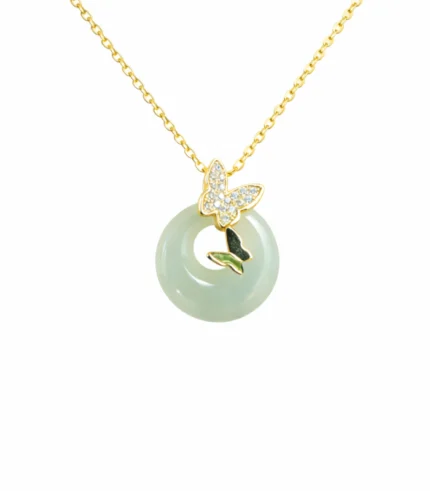
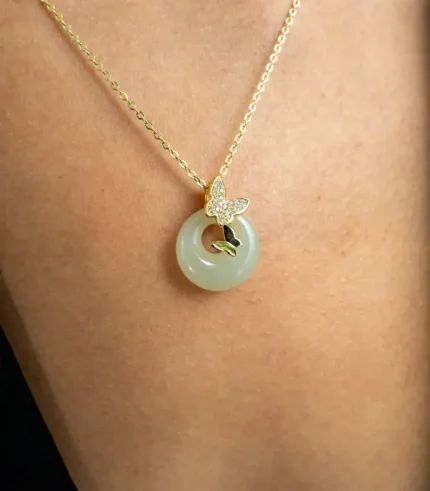
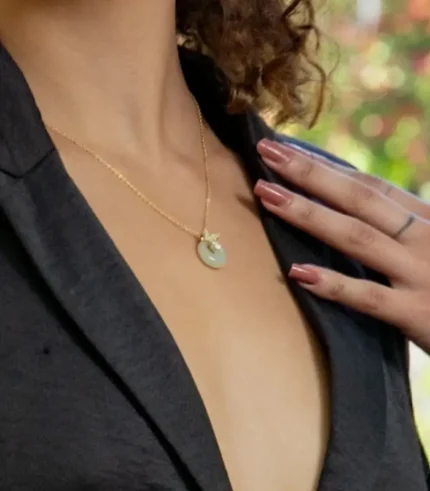
View all →Genuine White Jade Butterfly Necklace in 14K Gold Plated Silver
Original price was: $85.00.$76.50Current price is: $76.50.Genuine White Jade Flower Pendant Necklace in 14K Gold Plated Sterling Silver
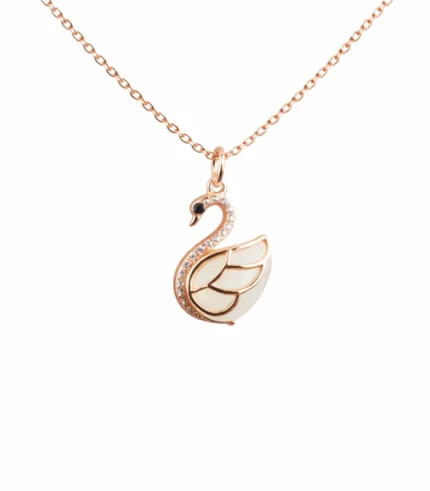
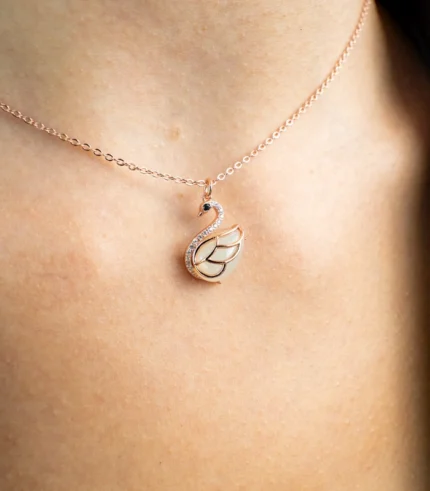
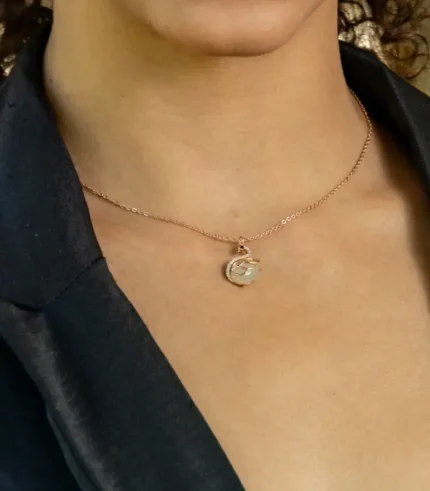
Original price was: $85.00.$76.50Current price is: $76.50.Genuine White Jade Swan Necklace in 14K Rose Gold Plated Silver
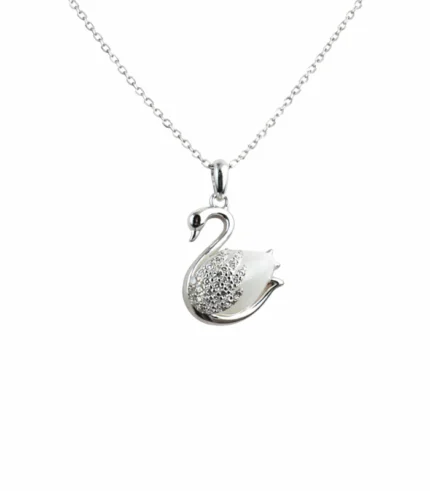
Original price was: $85.00.$76.50Current price is: $76.50.Genuine White Jade Swan Necklace in Sterling Silver
Original price was: $85.00.$76.50Current price is: $76.50.