Spotting Reconstituted Jade Powder Fakes
Reconstituted jade has quietly become one of the most common things sold as genuine jade today. The term describes material made from crushed jade powder or jade scrap, bound together with epoxy, resin, or polymer, then pressed and polished into beads, cabochons, and bangles. It looks convincing under shop lighting. However, it is not a solid, naturally formed stone.
Understanding reconstituted jade matters because it sits in a gray zone. Sellers rarely lie outright. They simply say “jade” and let the buyer assume. For example, a $30 bangle described as “natural jade stone” is very often pressed powder. Learning a few checks protects your money and your collection.
What Reconstituted Jade Actually Is
Real jade is one of two minerals. Jadeite is a pyroxene. Nephrite is an amphibole. Both form as interlocking fibrous crystals over millions of years. That structure is what gives jade its legendary toughness. You can read the mineral background on the Wikipedia entry for jade.
Reconstituted jade skips all of that. Manufacturers take jade dust, offcuts, or low-grade fragments left over from cutting. They mix the powder with a clear polymer binder. The mixture is pressed in a mold under heat and pressure. Dye is usually added at this stage to create that famous apple-green or lavender color.
Typically, the finished piece contains real jade material. That is exactly why it fools people. In most cases, though, the binder makes up a meaningful share of the volume. The stone’s crystal structure is gone. So is the durability and the value.
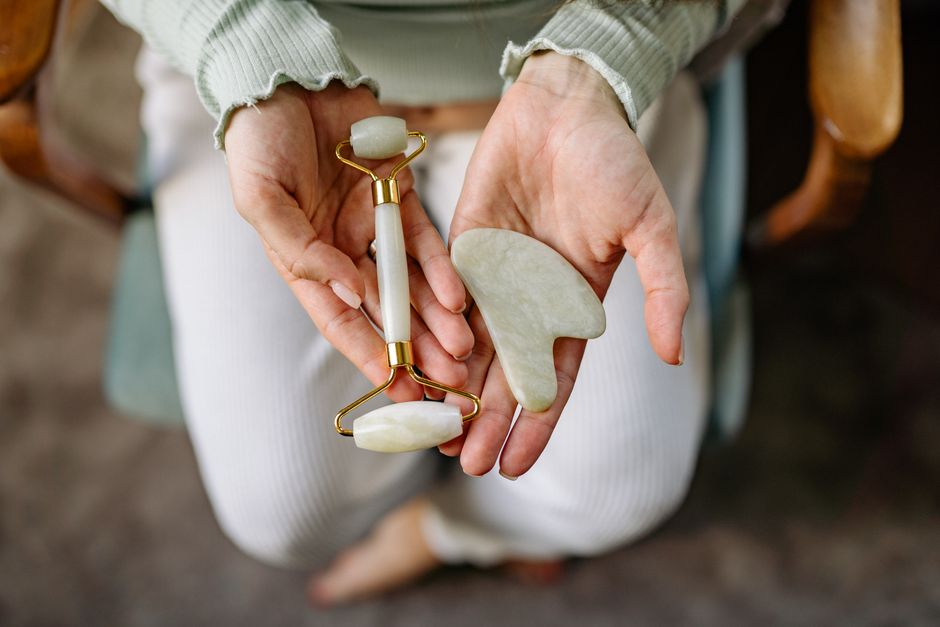
Shop white & blue jade jewelry
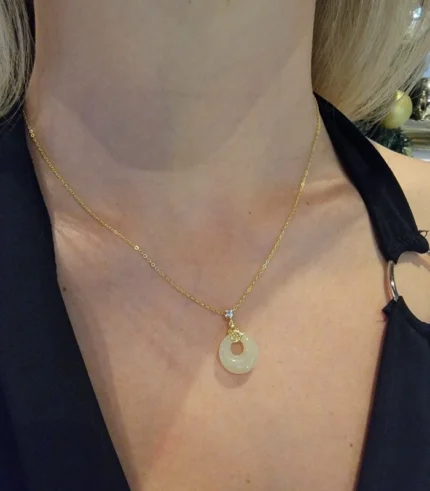
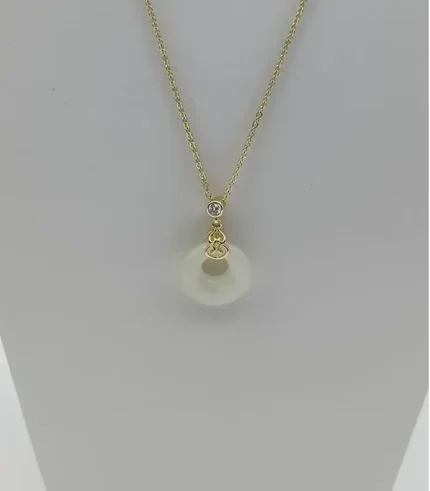
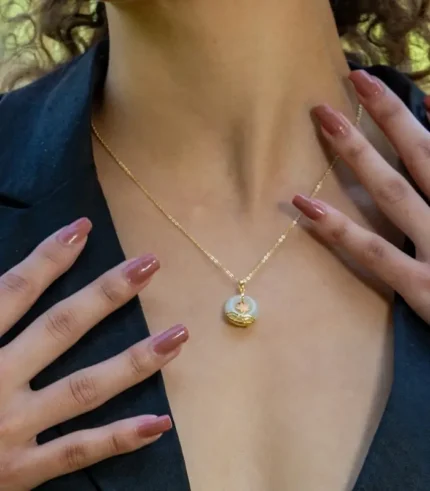
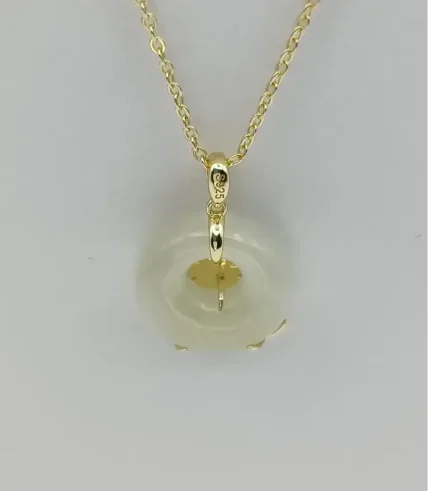
View all →Genuine White Jade Bi Disc Necklace in 14K Gold Plated Silver
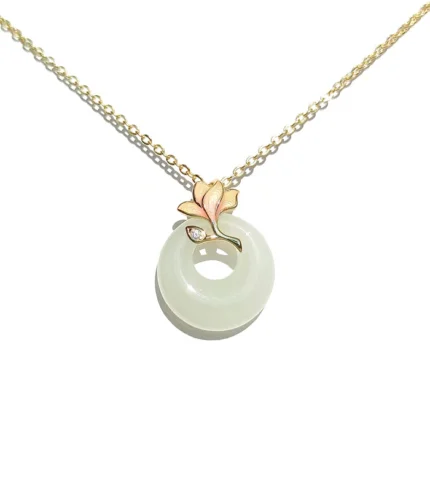
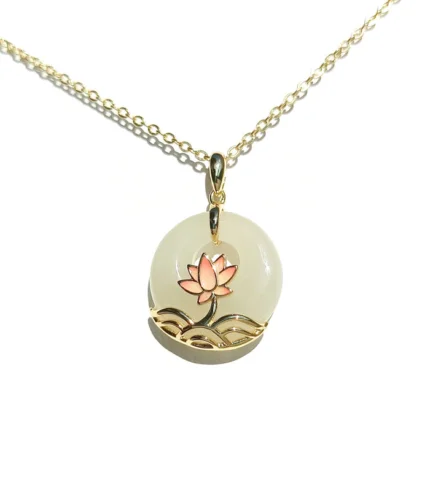
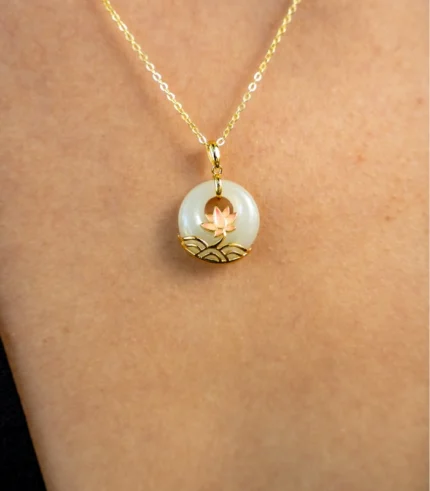
Original price was: $85.00.$76.50Current price is: $76.50.Genuine White Jade Lotus Necklace
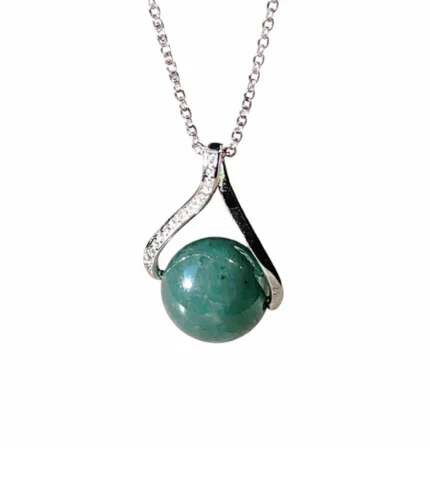
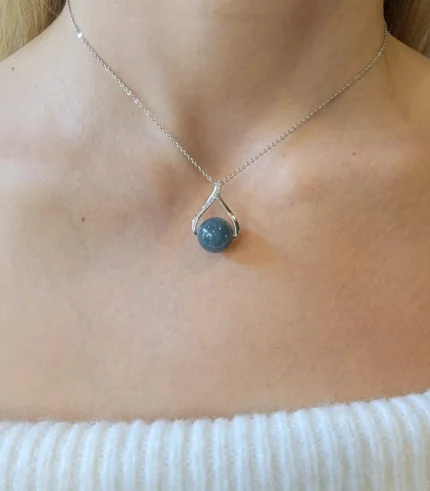
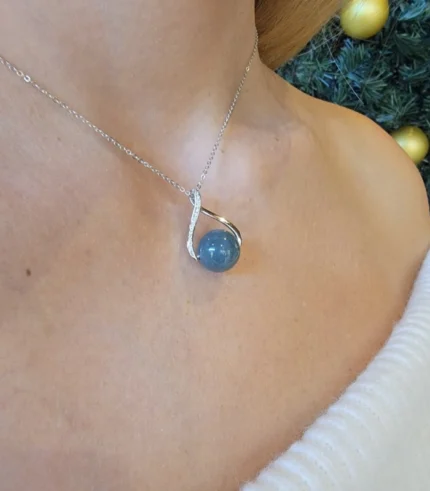
Original price was: $85.00.$76.50Current price is: $76.50.Genuine Blue Jade Round Necklace in Sterling Silver
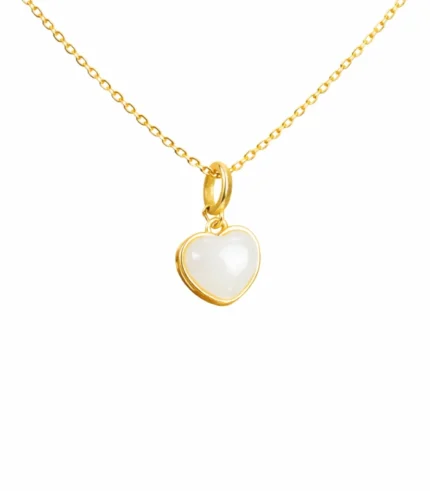
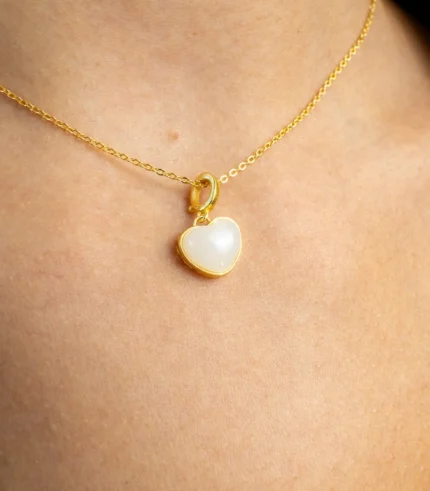
Original price was: $85.00.$76.50Current price is: $76.50.Genuine White Jade Heart Pendant Necklace in 14K Gold Plated Sterling Silver
Original price was: $85.00.$76.50Current price is: $76.50.

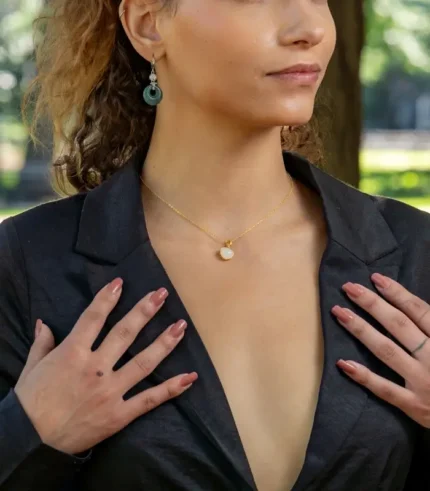
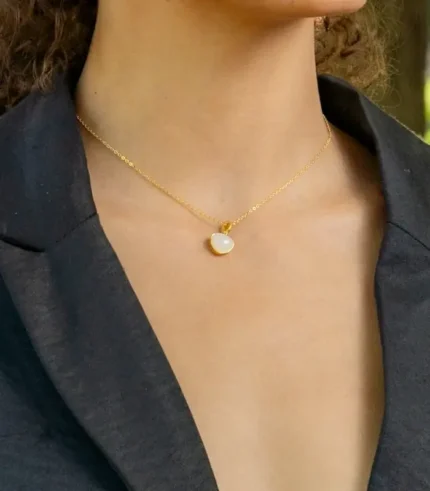
How Reconstituted Jade Differs From Type B and Type C Jade
The jade trade uses an informal A/B/C system. It describes treatment, not quality grade. Type A is untreated jadeite, polished with wax only. Type B has been bleached with acid, then impregnated with polymer resin. Type C is dyed. Many pieces are B+C, meaning both.
GIA has documented these treatments since the early 1990s. Their research on bleached and polymer-impregnated jadeite remains the standard reference. Infrared spectroscopy is the only method that conclusively confirms polymer in every case.
Here is the key distinction. Type B jade is still one continuous stone that has been chemically altered. Reconstituted jade was never one stone at all. It is an assembled composite. For example, a Type B bangle started life as a solid piece of jadeite. A reconstituted jade bangle started life as a bucket of powder. That is a bigger gap than most buyers realize.
Six Ways to Spot Reconstituted Jade at Home
None of these tests are conclusive alone. Together, they are quite reliable.
1. Look for impossible color evenness. Natural jade almost never shows perfectly uniform saturation. Real stones have gradients, cloudy patches, and fibrous veining. Reconstituted jade often looks flat and evenly colored, like painted plastic.
2. Use a 10x loupe. Tiny trapped air bubbles are a giveaway. Natural jade does not contain spherical bubbles. Resin binders do. Also look for a granular, sugary texture instead of interlocking fibers.
3. Check for repeating patterns. Molded pieces from the same batch often share identical “veining.” If two bangles in a tray match too closely, be suspicious.
4. Try longwave UV light. Most polymer-treated and reconstituted material glows a chalky blue-white. Untreated jadeite typically stays inert. This is a screening test, not proof.
5. Feel the weight and temperature. Jadeite runs about 3.2 to 3.4 g/cm³. Nephrite runs about 2.9 to 3.1. Resin composites are noticeably lighter. Real jade also stays cool against your skin longer.
6. Listen to it. Suspend a bangle on a string and tap it gently with another piece of jade. Solid jade rings with a clear, sustained chime. Reconstituted jade produces a dull click.
Join the KartiKart community
10% off, on top of any current sale, your first order + early access to new collections
Free · No spam · Unsubscribe anytime
Buying Smart and Caring for What You Own
Ask one direct question before you buy: is this Type A, untreated, and is it a solid stone or a composite? A reputable seller will answer plainly and put it in writing. If the answer is vague, walk away. For anything over roughly $200, request a certificate from a recognized lab. Independent reports typically cost $50 to $200 and are worth it.
Setting matters too. A beautiful jade cabochon deserves a setting that lasts. This is where 18K gold plated stainless steel is genuinely the smart pick. Modern plating on a stainless steel core is scratch-resistant, hypoallergenic, and built for daily wear.
It looks identical to solid gold at arm’s length. It also lets you own five settings for the price of one solid gold piece, so you can style the same stone five different ways. Care is easy. Remove pieces before swimming or showering, and store them dry in a pouch. That is a ten-second habit that keeps the finish looking new for years.
Frequently Asked Questions
Is reconstituted jade real jade?
It contains real jade powder, so it is not entirely synthetic. However, it is a composite bound with resin, not a natural solid stone. Most gemological labs classify it as an assembled or imitation material.
Can reconstituted jade be tested at home with certainty?
No. Home checks like the loupe, UV, and sound tests are strong screening tools. Only laboratory infrared spectroscopy confirms polymer content conclusively.
Does reconstituted jade hold any value?
Very little resale value, in most cases. It is fine as decorative fashion jewelry if it is priced and described honestly. The problem is that it is frequently sold at natural jade prices.
Shop Jewelry at KartiKart
Explore our collection of handcrafted 18K Gold Plated Stainless Steel jewelry. Every piece is designed for everyday elegance at an accessible price point.
Bracelets · Earrings · Necklaces
Sources & Further Reading
For verified gemstone and jewelry information:
Content last reviewed September 2026. If you notice any outdated information, please contact us.
From the KartiKart shop
Wear what you just read about
Dainty, everyday pieces, handpicked by a husband-and-wife team. Free U.S. shipping, gift-ready packaging, 30-day easy returns, and 5% of every order goes to organizations fighting human trafficking.
Shop white & blue jade jewelry →Pieces our readers love
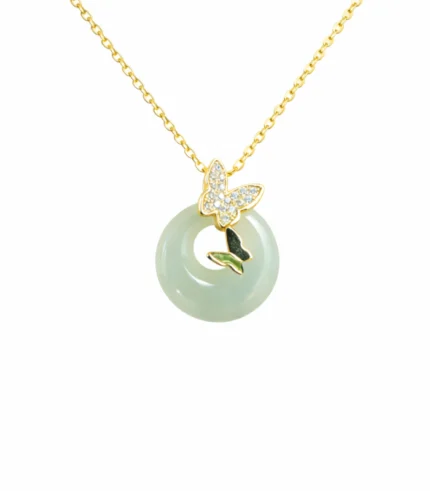
View all →Genuine White Jade Butterfly Necklace in 14K Gold Plated Silver
Original price was: $85.00.$76.50Current price is: $76.50.Genuine White Jade Flower Pendant Necklace in 14K Gold Plated Sterling Silver
Original price was: $85.00.$76.50Current price is: $76.50.Genuine White Jade Swan Necklace in 14K Rose Gold Plated Silver
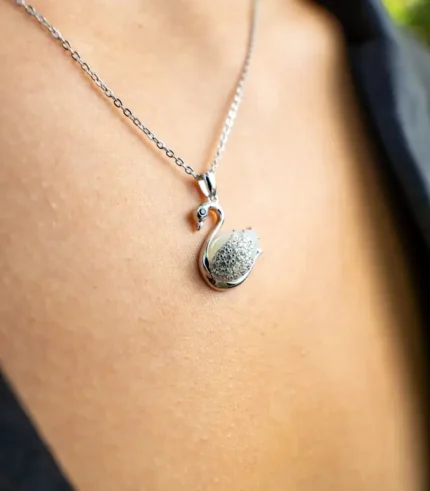
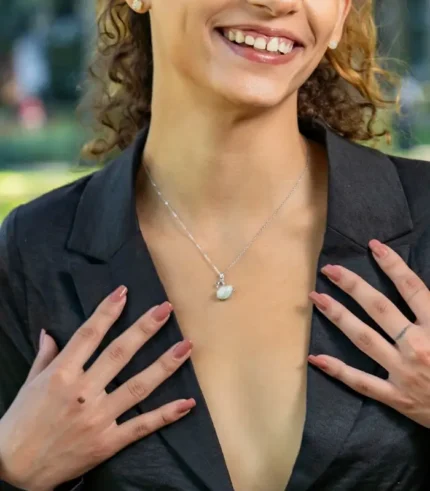
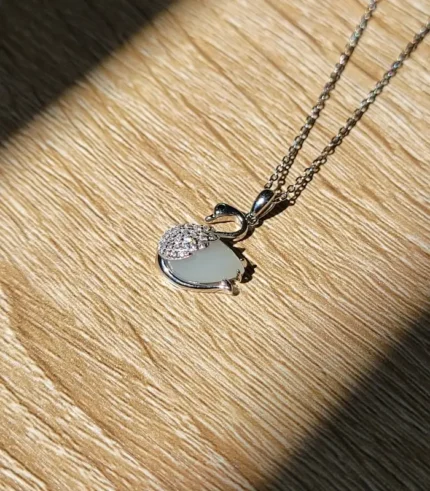
Original price was: $85.00.$76.50Current price is: $76.50.Genuine White Jade Swan Necklace in Sterling Silver
Original price was: $85.00.$76.50Current price is: $76.50.